"You Life, Your Soul"
Jul 7, 2025
https://youtu.be/Uj46iJ1aYrw

Psalm 1 Blessed Is the Man!
To be blessed is to be happy or full of joy. It
is much more than a feeling, however; it is a joyous position resulting from a
right relationship with God.
When we meditate by wrapping our hearts and minds around God’s
revelation of himself in his Word (law), we find spiritual stability, depth of
character and divine blessing. See the article Isn’t meditation used by other
religions? (77:12).
This psalm offers a principle, not a guarantee of success. The
ancient Hebrews did not limit their definition of success to the purely
financial aspect of life. They valued other factors as well, including a
positive reputation and community respect. For the righteous, success is
measured not in the accumulation of wealth but in the experience of God’s
blessing on their words and deeds. See the article Are proverbs ironclad
promises? (Pr
3:1–4).
After wheat is harvested, the chaff (stems,
leaves, husks and dust) is separated from the grain in a process called winnowing.
Chaff is carried away by the lightest wind, and its removal brings
about cleansing by removing the unwanted seed coverings and debris from the
grain. In this verse, the worthless chaff symbolizes the
wicked, who will be separated from the righteous at judgment.
Psalm 2 "Thou Art My Son!"
2 Samuel 5:11–6:23
David Defeats the Philistines
The Ark Brought to Jerusalem
Uzzah and the Ark
David and Michal
1 Chronicles 13
The Ark Brought from Kiriath-Jearim
Uzzah and the Ark
1 Chronicles 14
David's Wives and Children
Philistines Defeated
1 Chronicles 15
The Ark Brought to Jerusalem
1 Chronicles 16
The Ark Placed in a Tent
David's Song of Thanks
Worship Before the Ark
When Brothers Dwell in Unity
Psalm 133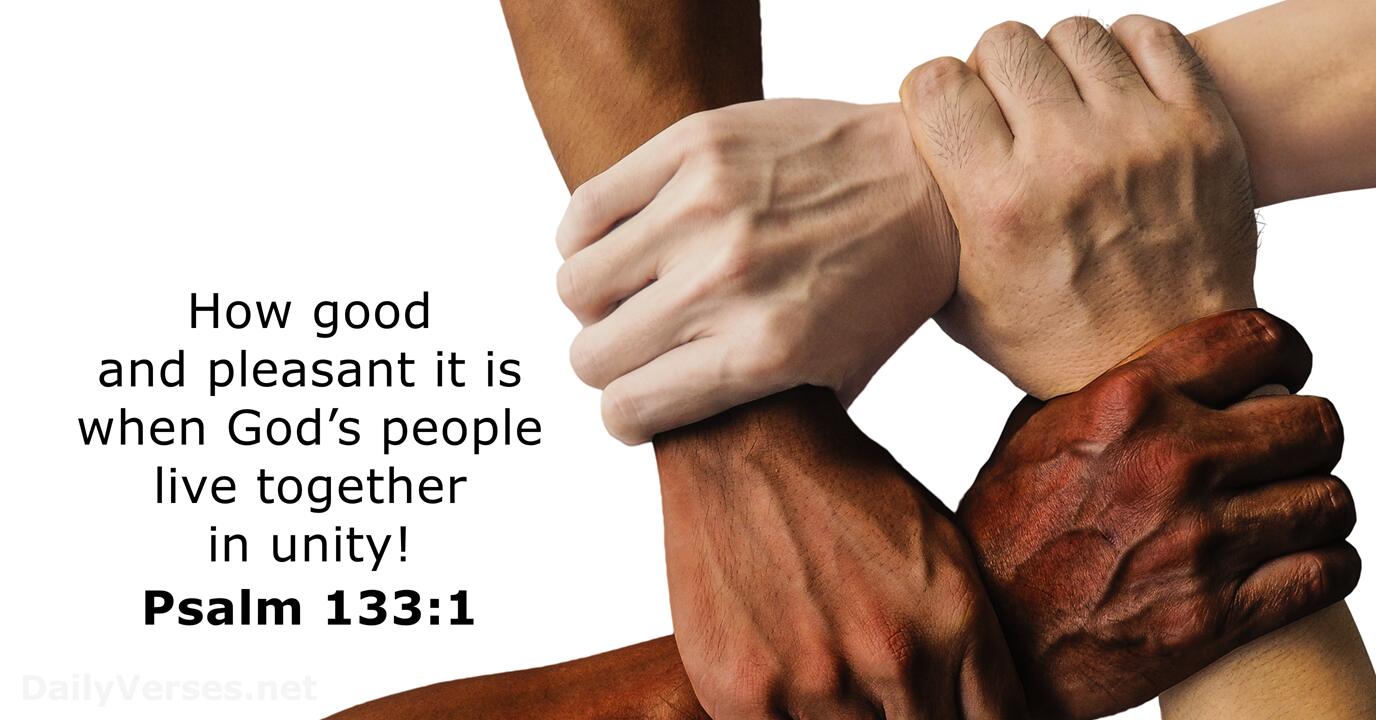




The Words of King Lemuel
1The words of King Lemuel. An oracle that his mother taught him:
2What are you doing, my son?a What are you doing, son of my womb?
What are you doing, son of my vows?
3Do not give your strength to women,
your ways to those who destroy kings.
4It is not for kings, O Lemuel,
it is not for kings to drink wine,
or for rulers to take strong drink,
5lest they drink and forget what has been decreed
and pervert the rights of all the afflicted.
6Give strong drink to the one who is perishing,
and wine to those in bitter distress;b
7let them drink and forget their poverty
and remember their misery no more.
8Open your mouth for the mute,
for the rights of all who are destitute.c
9Open your mouth, judge righteously,
defend the rights of the poor and needy.
The Woman Who Fears the Lord
10d An excellent wife who can find?
She is far more precious than jewels.
11The heart of her husband trusts in her,
and he will have no lack of gain.
12She does him good, and not harm,
all the days of her life.
13She seeks wool and flax,
and works with willing hands.
14She is like the ships of the merchant;
she brings her food from afar.
15She rises while it is yet night
and provides food for her household
and portions for her maidens.
16She considers a field and buys it;
with the fruit of her hands she plants a vineyard.
17She dresses herselfe with strength
and makes her arms strong.
18She perceives that her merchandise is profitable.
Her lamp does not go out at night.
19She puts her hands to the distaff,
and her hands hold the spindle.
20She opens her hand to the poor
and reaches out her hands to the needy.
21She is not afraid of snow for her household,
for all her household are clothed in scarlet.f
22She makes bed coverings for herself;
her clothing is fine linen and purple.
23Her husband is known in the gates
when he sits among the elders of the land.
24She makes linen garments and sells them;
she delivers sashes to the merchant.
25Strength and dignity are her clothing,
and she laughs at the time to come.
26She opens her mouth with wisdom,
and the teaching of kindness is on her tongue.
27She looks well to the ways of her household
and does not eat the bread of idleness.
28Her children rise up and call her blessed;
her husband also, and he praises her:
29“Many women have done excellently,
but you surpass them all.”
30Charm is deceitful, and beauty is vain,
but a woman who fears the Lord is to be praised.
31Give her of the fruit of her hands,
and let her works praise her in the gates.

Proverbs 31 is a complex chapter that has been interpreted in various ways throughout history. It begins with a king seeking advice from his mother on how to find a virtuous wife. The mother responds with a poetic description of an ideal woman, highlighting her industriousness, wisdom, and devotion to her family.
However, some scholars argue that the chapter is not solely about marriage or domesticity. They suggest that it is a broader reflection on the qualities of a wise and godly person, regardless of gender or marital status. This interpretation emphasizes the woman's entrepreneurial spirit, her generosity to the poor, and her overall contribution to society.
Ultimately, the meaning of Proverbs 31 is open to interpretation. It can be seen as a guide for women seeking to live virtuous lives, a model for ideal spouses, or a broader reflection on the qualities of wisdom and godliness. The specific interpretation often depends on the reader's cultural and religious context.
Proverbs 31 is a chapter in the Book of Proverbs in the Bible, traditionally attributed to King Lemuel. It consists of two main sections: advice from a mother to her son and a description of the ideal woman.
In essence, Proverbs 31 serves as a guide for both men and women, highlighting the virtues of leadership, righteousness, and the characteristics of an admirable person.
==============
(PROVERBS 31)
Wisdom instructs kings and praises the virtuous, wise, and industrious woman.
I. A Godly Mother’s Counsel (31:1–9)
A. Whom she taught (31:1–2): She taught her son, King Lemuel
B. What she taught (31:3–9)
1. The Negative (31:3–7)
a. “Do not spend your strength on women, on those who ruin kings” (31:3).
b. Do not guzzle wine or crave liquor (31:4–7).
2. The Positive (31:8–9): Stand up for the poor and needy.
II. A Godly Wife’s Character (31:10–31)
A. Her worth (31:10, 25, 29)
1. She is more precious than rubies (31:10).
2. “She is clothed with strength and dignity” (31:25): “She laughs with no fear of the future.”
3. She surpasses all other women (31:29).
B. Her works (31:13–22, 24, 27)
1. With her family (31:13–15, 17–19, 21–22, 27)
a. She provides them with proper clothing (31:13, 21): She finds wool and flax and spins it.
b. She plans meals and her day (31:14–15): She brings food from afar and gets up before dawn to prepare breakfast.
c. She is tireless in her work (31:17–19): She is a hard worker, looking for bargains and working late into the night.
d. She cares for and watches over the entire household (31:22, 27): She makes her own clothes and bedspreads.
2. With her finances (31:16, 24)
a. She buys and sells property (31:16).
b. She plants vineyards with her earnings (31:16).
c. She makes and sells belted linen garments and sashes (31:24).
3. With the less fortunate (31:20): She extends her arms to the poor and needy.
C. Her wisdom (31:26): Her words of instruction are wise and kind.
D. Her witnesses (31:11–12, 23, 28, 31)
1. Her husband (31:11–12, 23)
a. Trusts her (31:11): “She will greatly enrich his life.”
b. Knows she helps him (31:12): “She will not hinder him.”
c. Is respected among the city elders (31:23).
2. Her children (31:28): They “stand and bless her.”
3. Her fellow citizens (31:31): She should be publicly praised.
E. Her worship (31:30): She fears and reverences God.

How is this king brought to his mother? To the Lord? To his senses? And to his people?
If the Jerusalem Times decided to print each of these paragraphs (Proverbs 31:2-3, 4-7, 8-9) as separate articles, with you as its editor, what head-line would you give each one? What accompanying pictures do they bring to mind? What section of the paper do they fit in best?
Proverbs 31:10-31 forms an "acrostic"; that is, each verse in succession begins with the next letter of the 22-character Hebrew alphabet. How might this carefully crafted epilogue and personification of wisdom relate to the prologue (Proverbs 1::1-7)?
Would the author of this epilogue be applauded by feminists or traditionalists? Would he or she (perhaps Lemuel's mother, Proverbs 31:1) support equal rights for women? Or sex-defined roles? What makes you think so? Which verses support which view?
From this chapter, how would this ideal woman define her "place": (a) The house, making meals and clothes? (b) The House and Senate, making decisions? (c) City market, on a shopping spree? (d) City market, as an entrepreneur, selling?
What does she manage: Kids? Domestic help? Property? Money? Business partnership? All of the above? Which of these roles do you see as the primary one for her? Why?
What abilities make her praiseworthy in the eyes of her husband? Her children? The city fathers? The poor and needy?
What is her spiritual life like? Her appointment calendar? Her work pace? Her temperament?

In what ways can you "speak up for those who cannot speak for themselves" (Proverbs 31:8)?
Besides women (Proverbs 31:3), who are "those who ruin kings"? How so? What should be your attitude to them?
What is your reaction to these sayings of this unknown king?
How could anyone become like this woman? What does Proverbs 31:10 imply? Is she just a symbol for some spiritual quality? A flesh and blood woman? Or both?
If she represents "God's ideal woman," should an "average" woman (single or married) aspire to her qualities? Likewise, should a man? Why or why not?
What would you think of someone who aspired to these qualities, but came up "a buck short"? What if she came up woefully short"?
Which of the domains managed by this ideal woman are also things you are involved in? Which of those roles energize you? Which ones drain energy from you?
How does this woman who "does it all" compare with your image of the woman today who "does it all"? What are the differences? The similarities? How can women today follow her example without wearing themselves out and compromising their role as wife and mother?
She spent her expertise and resources on the poor and needy (Proverbs 31:20). To whom or what mission do you give yourself?
She both feared the Lord and received the praise of her children, husband, and co-workers. Apart from the Lord's favor, whose opinion or praise matters most to you? Who is harder to please your family members or your co-workers? Why?
(Women) What do you think is "the reward she has earned" (Proverbs 31:31)? What reward do you think you deserve?
(Men) In what way could you best reward the work of the woman in your life? How do you expect the woman to respond?
(Group) You've finished your study of Proverbs. What stands out? What changes are you still praying about? In what ways are you wiser now than when you started? What disturbed you most?


