Search This Blog

Showing posts with label Psalms. Show all posts

Tuesday, October 7, 2025

Psalm 46:1-2

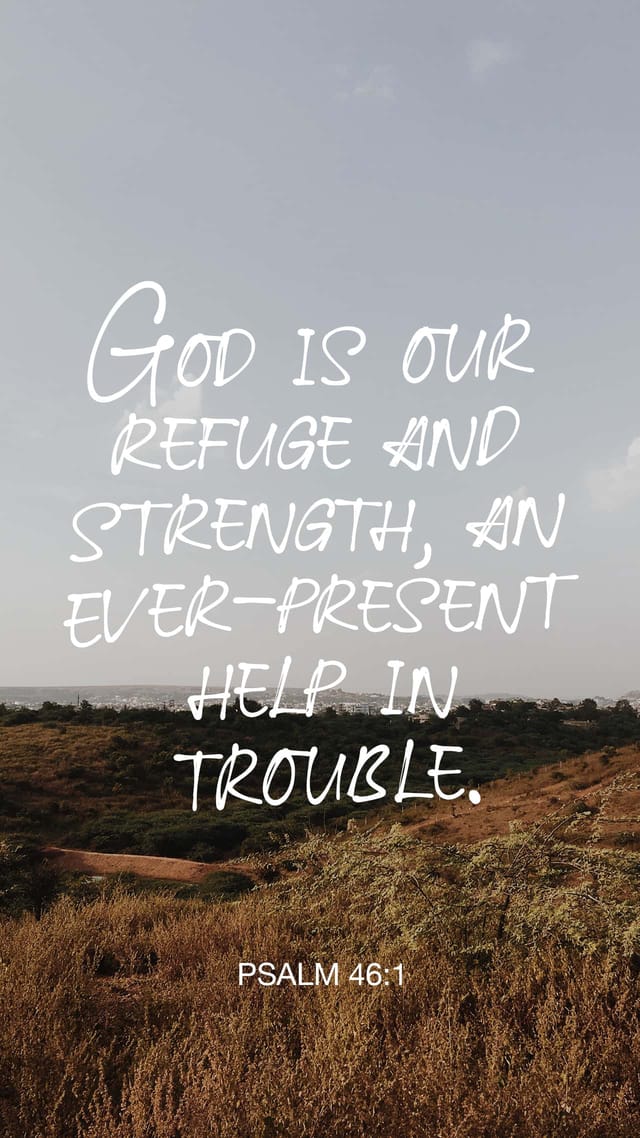
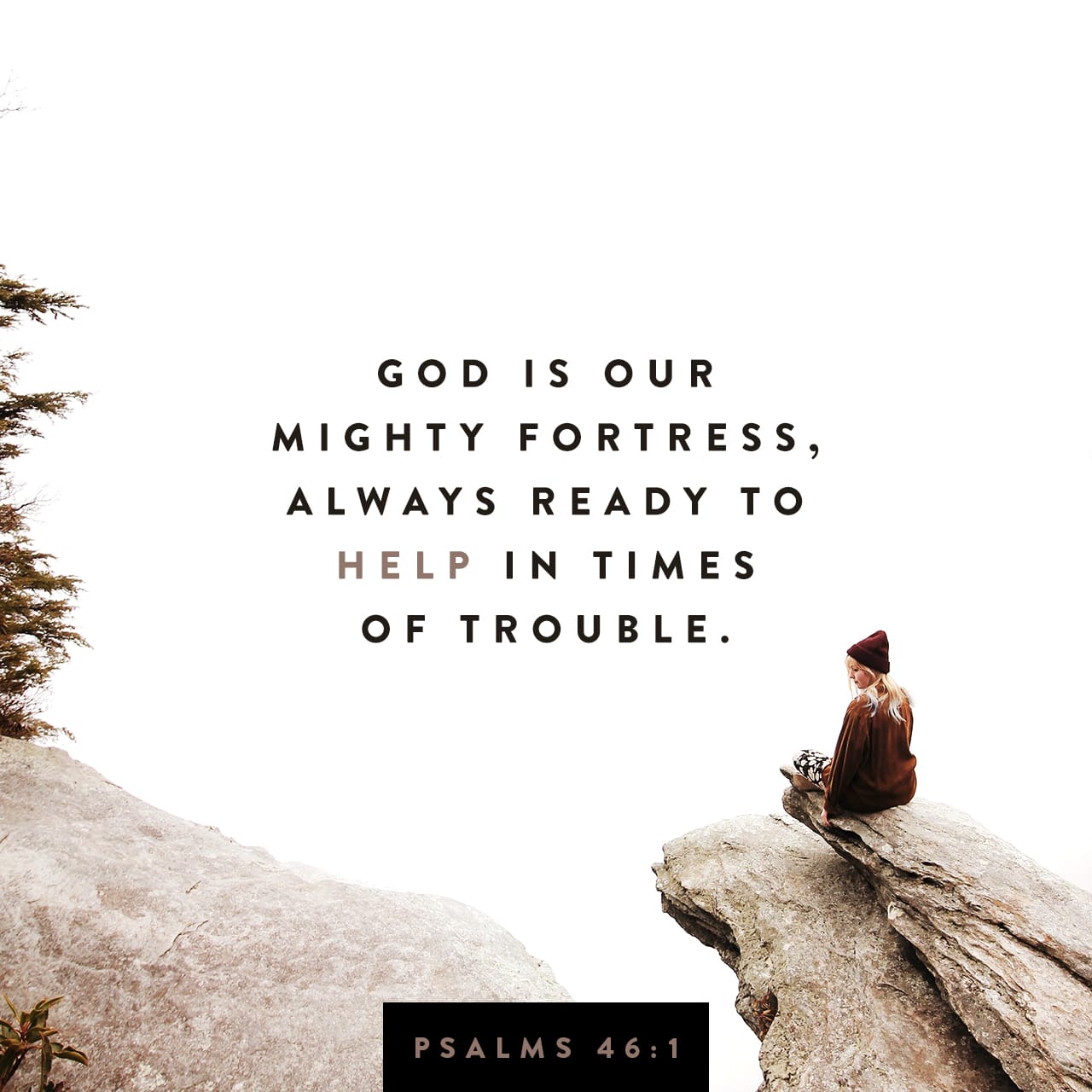
1God is our refuge and strength,
always ready to help in times of trouble.
2So we will not fear when earthquakes come
and the mountains crumble into the sea.

46:1 refuge The Hebrew word used here, machseh, which refers to a place of refuge, creates an image of a stronghold or impenetrable fortress (Ps 61:3; 91:2). It emphasizes God’s protection.
strength The Hebrew word used here, oz, emphasizes God’s power to protect or save (21:1; 29:11).
a very sufficient God’s help is always accessible or available to His people.
46:2–3 The psalmist describes natural catastrophes such as earthquakes, stormy waters, and unstable mountains, which symbolized the forces of chaos in the ancient Near East (see note on 18:7–19). These verses recall God’s power over chaos as evidenced in creation (see Gen 1:2 and note). The psalmist declares that he, and those speaking the psalm with him, will not fear the forces of chaos because God is their refuge and strength (Ps 46:1).

46:4 There is a river whose streams gladden Contrasts the chaotic waters of vv. 2–3 and symbolizes God’s blessing and renewal. See Ezek 47:1–12 and note.
the holiest of the dwellings of The term mishkan, meaning “habitation” or “dwelling,” refers to the temple (see Ps 26:8 and note; and 43:3 and note).
the Most High The Hebrew name used here, elyon, emphasizes God’s supremacy as ruler and judge over the entire earth (47:2; Deut 32:8). Melchizedek first used the name (see Gen 14:18 and note).
46:5 she will not be made to totter In contrast with the mountains of Ps 46:2, the mountain of God will not be moved. It is a secure place of refuge (v. 1).
46:6 he utters his voice The voice of God is enough to turn away the threat of the raging of enemy nations that plot to overthrow His people (2:1–3; see 29:3–9 and note).
46:7 Yahweh of hosts The Hebrew title used here for God, yhwh tseva'oth, refers to Him as the commander of heavenly armies. See 24:10 and note; Isa 1:9.
46:8–9 The psalmist encourages the congregation to examine the works of Yahweh. He uses imagery of weapons—bows, spears, chariots—to show Yahweh’s power over enemy nations. By looking at Yahweh’s military power, the people can have confidence, knowing that Yahweh is their refuge (Psa 46:1).

46:9 he breaks the bow The bow (qesheth) was a symbol of strength.
46:10 Be still The term raphah means “to release” or “let go” (37:8; Job 27:6). God commands the forces of chaos (Ps 46:2–3) and the nations (v. 6) to stop their raging and recognize Him as God (2:10–12).


Wednesday, August 13, 2025

Psalm 134, Psalm 146–150

Psalm 134


Psalm 146


Psalm 147


Psalm 148

https://www.facebook.com/jointhebibleproject/videos/523449162031041


Psalm 146


Psalm 150


Tuesday, August 12, 2025

2 Chronicles 6–7, Psalm 136

2 Chronicles 6

Solomon Blesses the People

Solomon's Prayer of Dedication


2 Chronicles 7

Fire from Heaven


The Dedication of the Temple


If My People Pray


Psalm 136

His Steadfast Love Endures Forever


Wednesday, July 30, 2025

Psalm 33


Psalm 33:16‐21 (NIV): “No king is saved by the size of his army; no warrior escapes by his great strength.  A horse is a vain hope for deliverance; despite all its great strength it cannot save.  But the eyes of the Lord are on those who fear Him, on those whose hope is in His unfailing love, to deliver them from death and keep them alive in famine.  We wait in hope for the Lord; He is our help and our shield.  In Him our hearts rejoice, for we trust in His holy name.”  
    
One of the greatest vulnerabilities of Christians today is to approach career, struggles, and objectives out of their own strength – not relying on or trusting in God as the source of their success.  Trusting God does not relieve you of the responsibility of doing your best.  Trusting God and doing your best are two different issues.  2 Timothy 2:15 says, “Do your best to present yourself to God as one approved, a workman who does not need to be ashamed and who correctly handles the word of truth.”  God calls you to do your best and be capable in what you are doing, but your underlying position is to be called, led, equipped, sustained, and empowered by God.  Galatians 2:20 says, “I have been crucified with Christ and I no longer live, but Christ lives in me. The life I live in the body, I live by faith in the Son of God, Who loved me and gave Himself for me.”  

As a follower of Christ, you must always remember that it is not by your power, equipping, and tools that you succeed.  True success is found only through the Lord.  Your job is to keep your eyes on the Lord.  No matter how difficult or impossible the challenge, your hope is in God and not the circumstances.  Christ has secured your place for eternity; your place now is to be used by Him for His purposes.  1 Corinthians 15:57 says, “But thanks be to God!  He gives us the victory through our Lord Jesus Christ.”  God wants to pour His life into you each day.  Do not be an obstacle for His in‐pouring by relying on yourself and not Him.  It is in your moments of greatest need that God is closest.  Draw into Him and allow Him to pour into you!

2 Corinthians 12:9: “But He [Jesus] said to me, ‘My grace is sufficient for you, for My power is made perfect in weakness.’ Therefore I will boast all the more gladly about my weaknesses, so that Christ's power may rest on me.”

Psalm 34


=============

Psalm 34:1 “I will extol the Lord at all times; His praise will always be on my lips.”  NIV
     
Praise for God your Father should be the easiest thing that flows from your heart and mouth.  The pure recognition of you not only being God’s creation, but also being the recipient of His love and grace through your redemption in Christ Jesus should flood your heart with praise for Him.  

Romans 5:8 say, “But God demonstrates His own love for us in this: While we were still sinners, Christ died for us.”  Your praise should not be limited to when you receive something from God, but praise Him for the reality that God Almighty even considers you.  Your praise should not be limited to when you come out of hard times, but just for the normal things in your life.  Your praise should not be limited to when you get a raise or promotion, but for the very job you have.  Your praise should not be limited to when God heals you, but for the very breath of life itself.  Praise should not be limited to
Sunday morning, but to every waking moment.  Praise is the inexpressible recognition of Who God is in your life, His immeasurable love for you, His never exhausting patience with you, and His unfathomable capacity to cover you with His grace.  Your praise is not dependent on how good times are, but how GOOD YOUR GOD IS!  

Romans 5:6 says, “You see, at just the right time, when we were still powerless, Christ died for the ungodly.”  The world’s affect on you is probably crowding God out of your life when your praise becomes limited to the events of life itself and not your life in communion with God.  It is out of your intimacy with God that you begin to see and experience God in every detail of your life.

Philippians 1:9‐11 “And this is my prayer: that your love may abound more and more in knowledge and depth of insight, so that you may be able to discern what is best and may be pure and blameless until the day of Christ, filled with the fruit of righteousness that comes through Jesus Christ — to the glory and praise of God.”  NIV

Romans 11:33, 36 “Oh, the depth of the riches both of the wisdom and knowledge of God!  How unsearchable are His judgments and unfathomable His ways!  For from Him and through Him and to Him are all things.  To Him be the glory forever! Amen.”  NIV


============
Psalm 34:11 “Come, my children, listen to me; I will teach you the fear of the Lord.”   

The Church has done a good job of sharing about Jesus, but not as well on teaching about the fear of the Lord.  A recent Barna survey found that 86% of youth had a negative perception of Christians.  The top two reasons given in the survey are: (1) Christians are judgmental and (2) Christians are hypocritical.  These two areas were major teaching points of
Jesus yet are two of the biggest stumbling blocks for people coming to Jesus.  

In the Psalm above, the writer (David) is encouraging you to allow him to teach you the fear of the Lord.  Let’s think about how Jesus would teach you the fear of the Lord?  I believe Jesus would do it by spending time with you.  Jesus began His ministry with hundreds, if not thousands of followers, but whittled them down to 77, then 12, and finally 3 which reflected the increased intensity of teaching, fellowship, and relationship with His disciples.  

Jesus knew that a changed life comes from a healthy fear of God, and a healthy fear of God comes out of the intensity of His relationship with His disciples.  The same is true for followers of Christ today.  Fear of God is reverence, respect, and faith that God is God and He “Is”, “Was”, and “Will Always” be God!  Your fear of God will come out of the intensity of your relationship with Him on a daily basis.  If Jesus were to say to me, “Come, my child, listen to Me; I will teach you the fear of the Lord,” I would envision myself sitting at His feet listening to His words and stories.  Reading His Word, talking to Him, receiving His Word into your life and allowing it to galvanize your life will cultivate intimacy with God.  

A life that is touched by God is a life that fears God.  A life that fears God is a life that is experiencing God’s love and grace while growing in appreciation of who He is.  As you read the following Scriptures, pray for God to open your heart to new levels of intimacy with Him.

Imitate Jesus - Mark 1:35 “Very early in the morning, while it was still dark, Jesus got up, left the house and went off to a solitary place, where He prayed.”   

Priority - Job 23:12 “I have not departed from the commands of His lips; I have treasured the words of His mouth more than my daily bread.”  

Hunger for God - Psalm 42:1-2 “As the deer pants for streams of water, so my soul pants for You, O God.  My soul thirsts for God, for the living God. 
When can I go and meet with God?”  

Refreshed by God - Psalm 90:14 “Satisfy us in the morning with Your unfailing love, that we may sing for joy and be glad all our days.”  

Instructed by God - Isaiah 50:4-5 “The Sovereign Lord has given me an instructed tongue, to know the word that sustains the weary.  He wakens me morning by morning, wakens my ear to listen like one being taught.  The Sovereign Lord has opened my ears, and I have not been rebellious; I have not drawn back.”   


Monday, July 28, 2025

Wednesday, July 16, 2025

Psalm 62

 Psalm 62

True Happiness

This psalm expresses confidence in the king and offers prayer for him. The king rests in God despite his difficulties. Although his deceptive and powerful adversaries push hard against him, he remains undaunted. He encourages himself and his people to trust in God and to see their human adversaries from God’s perspective, where they appear frail, fleeting, and deceptive (62:9).

62:1 my soul waits in silence Rather than continually crying out to God (compare 22:2), the psalmist quietly waits for Him, confident that He will bring salvation.
62:2 Only he Asserts trust in God alone-He is the only one who can deliver the psalmist and provide him with safety and security.
is my rock The Hebrew word used here, tsur, describes a secure location and emphasizes Yahweh's protection.
my salvation The Hebrew word used here, yeshu'ah-which may be rendered "salvation" or "deliverance"-refers to the liberation God provides from hazards and problems.
my high stronghold The Hebrew word used here, misgav, describes a high wall or rocky fortress. It emphasizes the stable protection God provides for those in need.
I shall not be greatly shaken The Hebrew verb used here, mot, expresses a lack of security and safety.
62:3 How long will you attack a man? All of you The psalmist addresses his enemies. He describes them as relentlessly attacking him, trying to bring him down as if he were a leaning wall. The enemies desire to topple the king with lies and cunning.
62:4 they are pleased with deception Emphasizes the deceit and hypocrisy of the wicked. Not only are they deceitful, but they enjoy falsehood. They hypocritically pretend to bless people when they are actually cursing them. My high position refers to the royal throne.
62:5-6 The psalmist repeats his opening words (vv. 1-2), declaring his trust in God nearly verbatim. The psalmist encourages himself and others to place their hope in God.
62:7 my glory The Hebrew word here, kavod, can refer to honor or reputation. The psalmist stakes his reputation, as well as his salvation, on his trust in God.
62:8 Trust him at all times, O people The psalmist encourages people in general to trust God at all times. Since God is their refuge, they can be confident as they trust Him.
62:9–12 Unlike God, humans are transient beings. Even when they thrive, their prosperity is fleeting.
62:9 In Hebrew, this verse includes two phrases meaning "sons of man"-bene-adam and bene ish. Many translations understand these to mean two different types of men. However, both phrases could be understood as synonyms, referring to humankind in general. not what they appear to be: People often try to look stronger and better than they are.
Only a vapor are men of low degree Demonstrates the folly of trusting in people, who are all fleeting.
a deception are The Hebrew word used here, kazav, is also used in v. 4 to describe falsehood.
62:10 do not set your heart on it The psalmist warns against trusting in wealth-especially wealth gained illegally by extortion or robbery. The crime of extortion means using intimidation and threats to make others give up what is theirs, while stealing is taking what belongs to others.
62:11 Once God has spoken The psalmist uses a numerical saying-a literary device common in Wisdom Literature-as he looks to God's promises. Strength and unfailing love remain in balance only in God. He cares for his people by ridding the world of evildoers.
strength belongs to God This emphasizes God's power to protect or save.
62:12 you will render to each The psalmist upholds God's justice. He trusts that God will give to each person what they deserve, based on their deeds-and by extension, based on whether or not they repent and turn to God. This type of divine retribution is common in Wisdom Literature (see Prov 24:12; Job 34:11).

Thursday, July 10, 2025

Friday, June 27, 2025

Psalm 15


"You Life, Your Soul"
Jul 7, 2025
https://youtu.be/Uj46iJ1aYrw


Psalm 1 and 2


Psalm 1  Blessed Is the Man!

  • v. 1 Blessed is to be obtained in 2 Ways.
    • Negatively
    • Positively
  • v. 3 The Rewards of the Blessed Man
  • v. 4 The Contrast to the Blessed Man


WHAT DOES IT MEAN TO BE BLESSED? (32:1)

To be blessed is to be happy or full of joy. It is much more than a feeling, however; it is a joyous position resulting from a right relationship with God.

SHOULD WE MEDITATE ON GOD’S LAW? (1:2)

When we meditate by wrapping our hearts and minds around God’s revelation of himself in his Word (law), we find spiritual stability, depth of character and divine blessing. See the article Isn’t meditation used by other religions? (77:12).

DOES FOLLOWING GOD BRING SUCCESS? (1:3–4)

This psalm offers a principle, not a guarantee of success. The ancient Hebrews did not limit their definition of success to the purely financial aspect of life. They valued other factors as well, including a positive reputation and community respect. For the righteous, success is measured not in the accumulation of wealth but in the experience of God’s blessing on their words and deeds. See the article Are proverbs ironclad promises? (Pr 3:1–4).

WHAT IS CHAFF? (1:4)

After wheat is harvested, the chaff (stems, leaves, husks and dust) is separated from the grain in a process called winnowing. Chaff is carried away by the lightest wind, and its removal brings about cleansing by removing the unwanted seed coverings and debris from the grain. In this verse, the worthless chaff symbolizes the wicked, who will be separated from the righteous at judgment.


Psalm 2 "Thou Art My Son!"

  • The Determined Hate of the People (v.1-3)
  • The Divine Tranquility (v. 4-6)
  • Messiah's Manifesto (v. 7-9)
  • Overtures and Counsels of Peace (v. 12)


Psalm 23

 Psalms 23


The Lord Is My Shepherd


Tuesday, June 24, 2025

June 21 = Psalm 133

 When Brothers Dwell in Unity

Psalm 133



Intro Questions

Text Graphic
  • God is ... What do we learn about God in this passage?
  • We are ... What do we learn about people in this passage?

  • I will ... What has the Holy Spirit revealed to us in this passage? How can I apply it to my life this week?

  • You can ... Who do you know who needs to hear this? Feel free to share with others by social media links at the bottom of this.


Other Resources:


Friday, June 20, 2025

Psalm 102 Psalm 103 Psalm 104

Psalm 102 

Do Not Hide Your Face from Me


Psalm 103 

Bless the Lord, O My Soul


Psalm 104

O Lord My God, You Are Very Great


Tuesday, June 10, 2025

Psalm 8

 Psalm 8


Psalm 16

Trusting God

Psalm 16


Text Graphic
  • God is ... What do we learn about God in this passage?
  • We are ... What do we learn about people in this passage?

  • I will ... What has the Holy Spirit revealed to us in this passage? How can I apply it to my life this week?

  • You can ... Who do you know who needs to hear this? Feel free to share with others by social media links at the bottom of this.


DAVID’S LAMENTS

David’s hymns of praise were associated with the time when David rejoiced before the ark of the covenant (see “The Book of Psalms” at Ps. 8). The other major category of psalms is laments, in which the singer complains to God and asks for help. Related to the lament is the song of trust, in which the singer expresses faith in God’s ability to deliver.

Several of the psalms associated with specific points in David’s life are laments or songs of trust. For example, Ps. 57 and 142 reflect David’s days of hiding in caves from Saul, while Ps. 3 and 7 reflect his flight from Jerusalem. All of these psalms are laments. Many other laments and songs of trust, however, are attributed to David, but provide no historical context. Nevertheless, these psalms can be read in light of this time in David’s life.

The arrangement of psalms in the Bible shows a movement from lament to praise (see “The Book of Psalms” at Ps. 8). If we read David’s laments according to the five “Books” of the psalms, we see the concentration of laments in Books I and II. In Book I (Ps. 1–41) itself are 22 more laments associated with David.

  • Psalms 4–6; 9–14; 16; 17; 22; 25–28; 31; 35; 36; 38; 40; 41


Friday, May 9, 2025

Psalm 34


#Fear
Psalm 34:11 “Come, my children, listen to me; I will teach you the fear of the Lord.”   

The Church has done a good job of sharing about Jesus, but not as well on teaching about the fear of the Lord.  A recent Barna survey found that 86% of youth had a negative perception of Christians.  The top two reasons given in the survey are: (1) Christians are judgmental and (2) Christians are hypocritical.  These two areas were major teaching points of
Jesus yet are two of the biggest stumbling blocks for people coming to Jesus.  

In the Psalm above, the writer (David) is encouraging you to allow him to teach you the fear of the Lord.  Let’s think about how Jesus would teach you the fear of the Lord?  I believe Jesus would do it by spending time with you.  Jesus began His ministry with hundreds, if not thousands of followers, but whittled them down to 77, then 12, and finally 3 which reflected the increased intensity of teaching, fellowship, and relationship with His disciples. 

Jesus knew that a changed life comes from a healthy fear of God, and a healthy fear of God comes out of the intensity of His relationship with His disciples.  The same is true for followers of Christ today.  Fear of God is reverence, respect, and faith that God is God and He “Is”, “Was”, and “Will Always” be God!  Your fear of God will come out of the intensity of your relationship with Him on a daily basis.  If Jesus were to say to me, “Come, my child, listen to Me; I will teach you the fear of the Lord,” I would envision myself sitting at His feet listening to His words and stories.  Reading His Word, talking to Him, receiving His Word into your life and allowing it to galvanize your life will cultivate intimacy with God.  

A life that is touched by God is a life that fears God.  A life that fears God is a life that is experiencing God’s love and grace while growing in appreciation of who He is.  As you read the following Scriptures, pray for God to open your heart to new levels of intimacy with Him.

Imitate Jesus - Mark 1:35 “Very early in the morning, while it was still dark, Jesus got up, left the house and went off to a solitary place, where He prayed.”   

Priority - Job 23:12 “I have not departed from the commands of His lips; I have treasured the words of His mouth more than my daily bread.”  

Hunger for God - Psalm 42:1-2 “As the deer pants for streams of water, so my soul pants for You, O God.  My soul thirsts for God, for the living God. 
When can I go and meet with God?”  

Refreshed by God - Psalm 90:14 “Satisfy us in the morning with Your unfailing love, that we may sing for joy and be glad all our days.”  

Instructed by God - Isaiah 50:4-5 “The Sovereign Lord has given me an instructed tongue, to know the word that sustains the weary.  He wakens me morning by morning, wakens my ear to listen like one being taught.  The Sovereign Lord has opened my ears, and I have not been rebellious; I have not drawn back.”