Reminder: Pray to God to set your heart right as you engage His word. The text you are about to study was not written to you but is written for you. So, before applying, we must ask the following questions:
What did it mean to the original reader or original audience?
READ THE SCRIPTURE (Multiple times & translations, and notice the words that stand out)
Biblegateway (NIV, CSB, NLT) (My choice of all-round site. It is a greatapp, better on computers or on a smartphone)
Biblia.com (New Century Version) (Great on a computer, especially if you have a Logos account)
OUTLINE AND LINKS TO PERICOPES (considering ebible & Serendipity)
Summarize the main story: Describe the events and context of the chapter in your own words.
Review and retell the story.
In 2 Corinthians 5, Paul contrasts our earthly existence with our future heavenly dwelling. He also discusses the significance of Christ's death, the importance of the ministry of reconciliation, and the transformation brought about by becoming a new creation in Christ.
Historical Context
Written from Macedonia around A.D. 55–56, 2 Corinthians shows Paul defending his ministry and comforting a church rocked by division. Chapter 5 sits at the heart of that defense: Paul explains why he suffers, why he speaks boldly, and why his hope rests beyond the present life.
2 Corinthians chapter 5 discusses the hope of eternal life and the longing for a heavenly dwelling, contrasting the temporary earthly existence with the eternal home provided by God. It emphasizes living by faith and the importance of pleasing God, regardless of one's physical state. The passage also highlights the ministry of reconciliation, where believers are called to persuade others of God's love and the transformative power of Christ's sacrifice. It asserts that through Christ, individuals become new creations, and believers are tasked with sharing the message of reconciliation, urging others to be reconciled to God, as God does not count sins against them.
Paul writes about the new bodies believers will one day receive and about the duty of believers as ambassadors for Christ.
I. The Reassurance (5:1–8): Paul speaks concerning our new bodies.
A. The old body (5:1a, 2a, 3–4a, 6–8)
1. Referred to as an earthly tent (5:1a)
2. Filled with groans and sighs (5:2a)
3. Dying (3–4a)
4. Unable to see Jesus face-to-face (5:6–8)
B. The new body (5:1b, 2b, 4b–5)
1. Referred to as a home in heaven (5:1b)
2. Without groans or sighs (5:4b)
3. Eternal (5:2b)
4. Able to see Jesus face-to-face (5:5)
II. The Resolve (5:9): Paul determines to please God in both bodies.
III. The Reckoning (5:10): The apostle reminds his readers of a sober truth.
A. The place (5:10a): It is the judgment seat of Christ.
B. The purpose (5:10b): Here, the quality (or lack of quality) of our life will be tested.
IV. The Reconciling (5:11–21)
A. God’s special ministry (5:14–15, 18–19, 21a)
1. He has reconciled all sinners (5:14–15): This he has accomplished by the death of Christ on the cross.
2. He has regenerated all repenting sinners (5:18–19, 21a): Each new believer receives a new nature.
B. Our special ministry (5:11–13, 16–17, 20, 21b)
1. The task (5:11–13, 21b): We have been given the ministry of reconciliation.
2. The title (5:16–17, 20): God looks upon us as his earthly ambassadors!
Where do we find our identity? How would people describe you?
Junkpile - what do you see?
Text Graphic
God is ... What do we learn about God in this passage?
We are ... What do we learn about people in this passage?
I will ... What has the Holy Spirit revealed to us in this passage? How can I apply it to my life this week?
You can ... Who do you know who needs to hear this? Feel free to share with others by social media links at the bottom of this.
Reflections:
We can be made clean on the inside.
John 17:14-16 - 14 I have given them your word and the world has hated them, for they are not of the world any more than I am of the world. 15 My prayer is not that you take them out of the world but that you protect them from the evil one. 16 They are not of the world, even as I am not of it. 17 Sanctify them by[d] the truth; your word is truth. 18 As you sent me into the world, I have sent them into the world. 19 For them I sanctify myself, that they too may be truly sanctified.
Digging Questions:
How to live a “Set Apart” life. Be Holy 1 Peter 1:13-16
Be Prepared 1 Peter 1:13
Be Self-Controlled - 1 Peter 1:13
Be Hopeful 1 Peter 1:13
Be Obedient 1 Peter 1:14
Be Holy 1 Peter 1:16
Live as Exiles/Foreigners
God sees me! 1 Peter 1:17
Recognize our differences 1 Peter 1:18-19
Living the Plan (not the dream) 1 Peter 1:20
Love Each Other
1 Peter 1:22
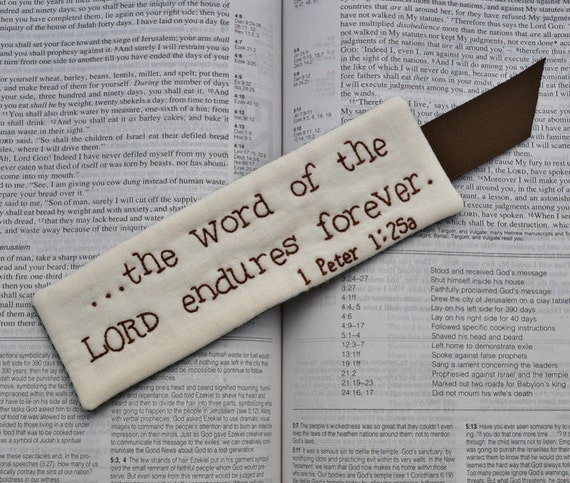
Stand on what Stands Forever
1 Peter 1;23-25a (Isaiah 40:6-8)
Take Away Challenges
How much time do you spend in God’s word getting close to Him?
Restoring
Relationships: Reconciliation, Not Always Resolution
by Rick
Warren"Work hard at living in peace with others" (1 Peter 3:11
NLT).
The seventh biblical step toward
restoring a relationship is to emphasize reconciliation, not resolution.
It's unrealistic to expect
everyone to agree about everything. Reconciliation focuses on the relationship,
while resolution focuses on the problem. When we focus on reconciliation, the
problem loses significance and often becomes irrelevant.
We can re-establish a
relationship even when we are unable to resolve our differences. Christians
often have legitimate, honest disagreements and differing opinions, but we can
disagree without being disagreeable.
The same diamond looks different
from different angles. God expects unity, not uniformity, and we can walk arm
in arm without seeing eye to eye on every issue.
This doesn't mean you give up on
finding a solution. You may need to continue discussing and even debating--but
you do it in a spirit of harmony. Reconciliation means you bury the hatchet,
not necessarily the issue.
With whom do you need to restore
fellowship? Pause right now and talk to God about that person. Then pick up the
phone and begin the process. The seven steps toward restoring relationships are
simple, but they’re not easy. It takes a lot of effort to restore a
relationship. That's why Peter urged, "Work hard at living in peace with
others" (1 Peter 3:11 NLT).
But when you work for peace, you
are doing what God would do. That's why God calls peacemakers his children.
A DIFFICULT WORD -- I heard about an office whose
answering machine was set up to instruct callers to leave their name and
address, and to spell any difficult words.
Early one Monday, when the secretary was reviewing the
weekend messages, she heard an enthusiastic young woman recite her name and
address, and then confidently offer, "My difficult word is reconciliation.
R-E-C-O-N-C-I-L-I-A-T-I-O-N."
Reconciliation can be a difficult word. It's not that
it's difficult to understand. Webster defines the word "reconcile" as
"to restore to friendship or harmony, to settle or resolve." The word
can be used in a variety of ways, but when it's applied to people it basically
means to get two separated people back together again. So we talk about a
husband who wants to be reconciled to a wife who has left him. A father who
wants to be reconciled to a wayward son. And a lost sinner who needs to be
reconciled to God.
While not difficult to understand, reconciliation can
be a difficult word to put into practice. It can be very difficult to get two
family members who are at odds to be reconciled. And it can sometimes seem very
difficult for us (or for others we know) to be made right with God.
A man once went
to a preacher because he was having some family problems. He wasn't a very
well-educated man and sometimes got his words confused. He said, "Me and
my wife need a re-cancellation." What he meant to say was reconciliation,
but the word re-cancellation wasn't a bad choice. Because there can be peace
for those who have been separated only when sin has been canceled. As sinners
before a righteous God, we need a "re-cancellation". And that's
exactly what Jesus made available when he died on the cross.
"....by Him to reconcile all things to Himself,
by Him, whether things on earth or things in heaven, having made peace through
the blood of His cross. And you, who once were alienated and enemies in your
mind by wicked works, yet now He has reconciled in the body of His flesh
through death, to present you holy, and blameless, and above reproach in His
sight." (Colossians 1:20-22)
Thanks be to God for making this difficult word a
reality in our lives.
Opening
Questions — Get Us Thinking:
· What animal do you consider
the “king of the jungle.”
The Supremacy of the Son of God — Colossians 1:15-23
15The Son is the image of the invisible
God, the firstborn over all creation. 16For in him all things were created:
things in heaven and on earth, visible and invisible, whether thrones or powers
or rulers or authorities; all things have been created through him and for him. 17He is before all things, and in him all
things hold together. 18And he is the head of the body, the
church; he is the beginning and the firstborn from among the dead, so that in
everything he might have the supremacy. 19For God was pleased to have all his
fullness dwell in him, 20and through him to reconcile to himself
all things, whether things on earth or things in heaven, by making peace
through his blood, shed on the cross.
21Once you were alienated from God and were
enemies in your minds because ofg your evil behavior. 22But now he has reconciled you by Christ’s
physical body through death to present you holy in his sight, without blemish
and free from accusation— 23if you continue in your faith,
established and firm, and do not move from the hope held out in the gospel.
This is the gospel that you heard and that has been proclaimed to every
creature under heaven, and of which I, Paul, have become a servant.
Research
Questions — “Dig Deeper” to find
God’s Will
1. God is ... What do we
learn about God?
2. We are ... What do we
learn about people?
3. What did Paul want his Colossian readers to focus on? What
about Christ causes us to look at Him as supreme?
4. This sounds strange. How can something invisible have an
image? What does the term "image" (v. 15) mean?
5. At first glance the word "firstborn" (v. 15) is
confusing. Was Jesus the first person created? How can we explain it in
context?
6. The “firstborn” has the rights of an heir. What rights does
Jesus have (vv. 15-18)? What is his relationship to “all things” and why say it
twice? Why emphasize this? (See note below)
7. What is meant by this list: thrones, powers, rulers, and
authorities (v. 16)?
8. How is Jesus the "head of the body" in verse 18?
9. What is his relationship to God and the church? What does
“fullness” imply (v. 19)? What should we note about God's pleasure in this
verse?
10. Why did all things need to be reconciled to God and the
“cross” indicate to us (v. 20)? How was this achieved by Jesus?
11. How much do you identify with verse 21, even now? Do you
still sense “evil” in your mind? How does verses 22-23 make you feel?
12. Can a Christian lose their salvation or their faith as the
word “continue” (v. 23) seems to indicate?
Reflective
Questions — Live it today.
1. At times, what people (or forces) seem to be more powerful
than Jesus? Why? How do you respond to the fact that even these are under
Christ’s authority?
2. How would you describe Jesus to someone who has never become
a disciple of Christ? To what would you compare him?
3. I will ... What has the
Holy Spirit revealed to you in this passage? How will you apply it to your life
this week?
4. You can ... Who do you
know who needs to hear this?
5. How does this equip us be a better disciple and help empower
us to “make disciples”?
"Anything
that one imagines of God apart from Christ is only useless thinking and vain
idolatry."
=================
Harding Lectures, 1975, Problem passages— by Ed Sanders
Colossians 1:15 — Christ the firstborn of all creation.
a. The theory that
Christ is a created god: the first of all things or persons made by God in
Creation.
b. Indications of
the eternity of Christ.
c. Discussion of becor
and prototokos = "firstborn".
d. Significance of
Revelation 3:14—the beginning of the creation of God.
e. Solution from
these evidences and context.
Materialists -
particularly Jehovah's witnesses - Like to cite Colossians 1:15 as evidence
that Christ is a created God. The idea is that God created Christ, then
everything else. This, it is said, makes Christ the firstborn of all creation.
Of course, John 1:1-3 indicates that Christ is eternal. He
is God. He made everything that has been made. Isaiah 9:6 speaks of the
promised child born of a virgin as "Eternal Father." Christ is
eternal, divine, and self-generating. He is not a created God.
The word, "firstborn" does not indicate order of
existence in time. In the O.T., it is the Hebrew word, becor and is used
with reference to Jacob (Ex 4:22). Jacob was a twin, but he was born after
Esau. Still, he is called God's firstborn. Why? Because the word means
"highest honored." It has to do with preeminence. Esau, who was born
first, was banished to barren Edom, the rocky desert south of the Dead Sea,
while the Christ came from Jacob, God's firstborn--highest honored--
preeminent.
It is also used of David, Psalms 89:27, though David was
born last of all of Jesse's Sons, God calls him God's own firstborn--highest
honored—preeminent.
The Greek equivalent of becor = "firstborn"
is prototokos and this is the word. Paul uses in Colossians 1:15. Christ
is God's highest honored—God's preeminent one and that is exactly what verse.
18 says.
Sometimes the "Created God" idea is buttressed
with Revelation 3:14. Where Christ is said to be the beginning of the creation
of God. What is willingly ignored is that the word "beginning” arche, can
mean source. The beginning of the Mississippi River is the outlet of Lake
Itasca in Minnesota. This is the source
of the great "Father of Waters." Christ, the preeminent one, is the
source of God's creation. Read again the first 3 verses of John's gospel and
the first 3 verses of Hebrews.
After reuniting with his brothers after a separation of 20 years, Joseph lays a plan that will determine if a reconciliation will be possible (Genesis 45:1 - 46:27).
Reminder: Pray to God to set your heart right as you engage His word. The text you are about to study was not written to you but is written for you. So, before applying, we must ask the following questions:
What did it mean to the original reader or original audience?
READ THE SCRIPTURE (Multiple times & translations, and notice the words that stand out)
Biblegateway (NIV, CSB, NLT) (My choice of all-round site. It is a greatapp, better on computers or on a smartphone)
Biblia.com (New Century Version) (Great on a computer, especially if you have a Logos account)
OUTLINE AND LINKS TO PERICOPES (considering eBible & Serendipity)
Summarize the main story: Describe the events and context of the chapter in your own words.
Review and retell the story.
2 Corinthians 7 brings a powerful message about purification from sin, the role of godly sorrow in leading to true repentance, and the resulting joy and comfort that come from reconciliation. It also captures Paul's emotional journey and his deep affection for the Corinthians, along with the joyous news brought by Titus.
Setting and Background
• Written from Macedonia (likely Philippi) soon after Paul received Titus’s encouraging report.
• Falls within the most personal portion of 2 Corinthians (chapters 1–7), where Paul defends his ministry and bares his heart.
• The “severe letter” (7:8) was probably a lost letter sent between 1 Corinthians and 2 Corinthians to address a painful disciplinary matter (2 Corinthians 2:3–4, 9).
• Corinth was a large port city known for immorality, yet the gospel had taken root there during Paul’s eighteen-month stay (Acts 18:1-18).
INITIAL SUMMARY:
This chapter emphasizes the importance of purifying oneself and perfecting holiness out of reverence for God. Paul expresses joy at the church's repentance, stating that he has neither wronged nor exploited anyone. He shares his pride in them and how their concern for him has brought him immense joy, especially after receiving comfort from Titus. Paul acknowledges that his previous letter caused sorrow, but it led to genuine repentance, which is positive. He highlights the transformation in the church, showcasing their earnestness and readiness to seek justice. Paul is encouraged by their response and remains confident in their devotion.
I. The Resolution (7:1): Paul urges the Corinthians to turn from the unclean and to seek God’s holiness.
II. The Request (7:2–4)
A. What the apostle asks (7:2a): He asks that they make room for him in their hearts.
B. Why the apostle asks (7:2b–4)
1. He has never wronged them (7:2b).
2. He has them in his heart (7:3–4).
III. The Relief (7:5–7): Paul expresses a twofold relief.
A. Upon seeing Titus the man (7:5–7): Paul has been beside himself worrying about Titus’s safety.
B. Upon hearing Titus the messenger (7:7): Paul is overjoyed to hear from Titus that the Corinthians warmly received both Titus himself and Paul’s rebuke, which resulted in their repentance.
IV. The Repentance (7:8–11): Paul contrasts godly repentance with worldly repentance.
A. The first is brought about by genuine sorrow over one’s sin and leads to salvation (7:8–10a, 11).
B. The second is false and leads to death (7:10b).
V. The Reaffirmation (7:12–16): Paul’s faith in the Corinthian church is reaffirmed by two factors.
OBSERVATIONS(Reflect on the topic and build the concept the writer is trying to communicate to the original audience)
Pericopes and links to deeper study
Paul's Joy in the Corinthians
People
Places
Points of Teaching
Practical Application
Paul
Titus
Corinthians
Macedonia
Corinth
Godly Sorrow vs. Worldly Sorrow
Joy of Reconciliation
Role of Encouragement
Power of Repentance
Examine Your Sorrow
Pursue Reconciliation
Encourage Others
Embrace Repentance
Verse 1 – Pursue Holiness in Body and Spirit
Paul urges believers, based on the promises just cited, to cleanse themselves from every stain of flesh and spirit, completing holiness in the fear of God.
Verses 2–4 – Open Hearts and Mutual Joy
He appeals for room in their hearts, assures them he has wronged no one, and expresses overflowing confidence and joy in them even amid affliction.
Verses 5–7 – Comfort through Titus and God’s Encouragement
Recounting troubles in Macedonia, Paul explains how God comforted him by Titus’s arrival and by news of the Corinthians’ longing, mourning, and zeal for him.
Verses 8–12 – Godly Sorrow Produces Repentance and Salvation
Paul’s earlier severe letter caused temporary grief, yet it produced “godly sorrow,” leading to earnest repentance, salvation, and vindication in everything.
Verses 13–16 – Joy at Your Obedience and Titus’ Refreshment
Paul and his coworkers are comforted; Titus’ spirit is refreshed; Paul’s boast about them stands proven; he now has complete confidence in their obedience.
ebible (NLT) (Best for having Bible sections divided by "pericope" or sections by thought)
Bible Project (NLT) (Helpful videos and instructions for the bigger picture)