Search This Blog

Showing posts sorted by relevance for query Commit. Sort by date Show all posts

Tuesday, June 10, 2025

Proverbs 16:1-33 Pathways of Wisdom: Harnessing the Power of the Tongue = Week 18 - Saturday

Wisdom's Blessings Come From The Lord

Words Of Advice To A Wise Son

Proverbs 16:1-33
PICTURE


Reminder: Pray to God to set your heart right as you engage His word. The text you are about to study was not written to you but is written for you. So, before applying we must ask the following questions:
  • What did it mean to the original reader or original audience?
READ THE SCRIPTURE(Multiple times & translations and notice the words that standout)
Biblegateway (NIV) (My choice of all-round site. It's a Great app, better on computers or on smartphones)
StepBible (ESV) (Great on phone or computer with good resources.)
Literal Word  (New American Standard Bible) (Works well on a smartphone or computer + for searching for words like a printed concordance)
Biblia.com (New Century Version) (Great on a computer especially if you have a logos account)
BibleRef.com (New King James Version) Basic able to compare core translations.
Bible.com (Lexham English Bible)


Hashtags:
#Wisdom
#Commit
#Work


Themes
Divine Wisdom
Human Plans vs God's Purpose
Personal Conduct
The Consequences of Actions
The Power of Words
The Importance of Righteousness and Justice

Topics
Trust in God
Role of Wisdom
The Power of Truth
The Meaning of Righteousness
The Consequences of Pride


Potential Sermon Titles: ??

Intro Questions to get us thinking:
  • Who plans most of the trips in your family? What does this involve: Family consensus? Long-range commitments? Prayer? Winning a lottery? Flying by the seat of your pants? Paralysis of indecision? Getting lost? 
  • At work, what is your usual role: Active initiator? Reliable respondent? Delegated to implement? Just along for the ride? Foot-dragger? Antagonist?


ESV Text with Highlights
#God 
#People = The LORD (God), Wise men, The King, The Righteous, The Wicked
#Time
#Place
#Obedient faith =
#Sin =
#Key Idea =

Proverbs 16 ESV

16 The plans of the heart belong to man,
    but the answer of the tongue is from the Lord.
2 All the ways of a man are pure in his own eyes,
    but the Lord weighs the spirit.[a]
3 Commit your work to the Lord,
    and your plans will be established.
4 The Lord has made everything for its purpose,
    even the wicked for the day of trouble.
5 Everyone who is arrogant in heart is an abomination to the Lord;
    be assured, he will not go unpunished.
6 By steadfast love and faithfulness iniquity is atoned for,
    and by the fear of the Lord one turns away from evil.
7 When a man's ways please the Lord,
    he makes even his enemies to be at peace with him.
8 Better is a little with righteousness
    than great revenues with injustice.
9 The heart of man plans his way,
    but the Lord establishes his steps.
10 An oracle is on the lips of a king;
    his mouth does not sin in judgment.
11 A just balance and scales are the Lord's;
    all the weights in the bag are his work.
12 It is an abomination to kings to do evil,
    for the throne is established by righteousness.
13 Righteous lips are the delight of a king,
    and he loves him who speaks what is right.
14 A king's wrath is a messenger of death,
    and a wise man will appease it.
15 In the light of a king's face there is life,
    and his favor is like the clouds that bring the spring rain.
16 How much better to get wisdom than gold!
    To get understanding is to be chosen rather than silver.
17 The highway of the upright turns aside from evil;
    whoever guards his way preserves his life.
18 Pride goes before destruction,
    and a haughty spirit before a fall.
19 It is better to be of a lowly spirit with the poor
    than to divide the spoil with the proud.
20 Whoever gives thought to the word[b] will discover good,
    and blessed is he who trusts in the Lord.
21 The wise of heart is called discerning,
    and sweetness of speech increases persuasiveness.
22 Good sense is a fountain of life to him who has it,
    but the instruction of fools is folly.
23 The heart of the wise makes his speech judicious
    and adds persuasiveness to his lips.
24 Gracious words are like a honeycomb,
    sweetness to the soul and health to the body.
25 There is a way that seems right to a man,
    but its end is the way to death.[c]
26 A worker's appetite works for him;
    his mouth urges him on.
27 A worthless man plots evil,
    and his speech[d] is like a scorching fire.
28 A dishonest man spreads strife,
    and a whisperer separates close friends.
29 A man of violence entices his neighbor
    and leads him in a way that is not good.
30 Whoever winks his eyes plans[e] dishonest things;
    he who purses his lips brings evil to pass.
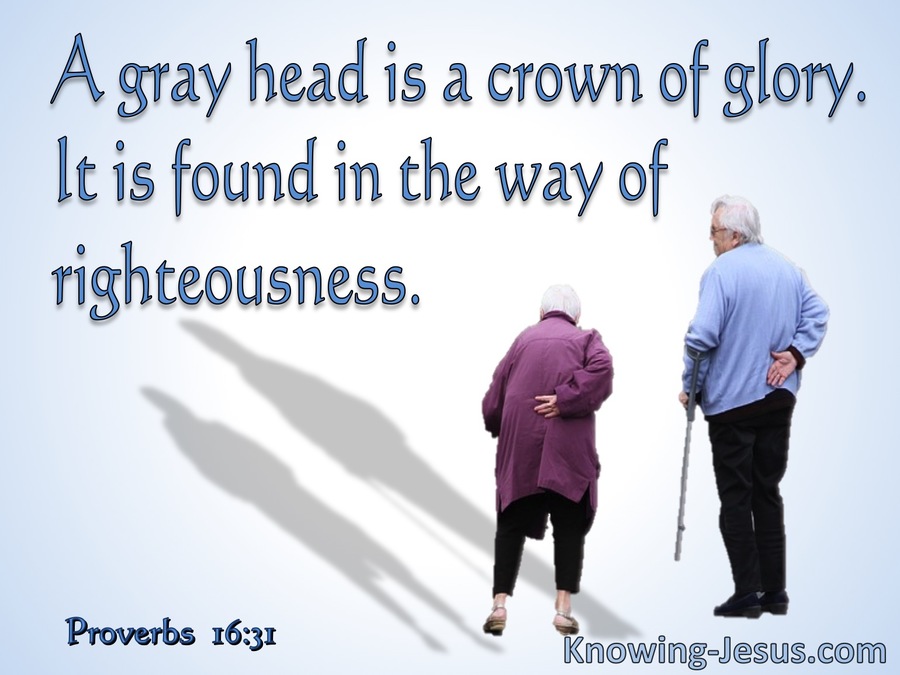
31 Gray hair is a crown of glory;
    it is gained in a righteous life.
32 Whoever is slow to anger is better than the mighty,
    and he who rules his spirit than he who takes a city.
33 The lot is cast into the lap,
    but its every decision is from the Lord.


OBSERVATIONS(Reflect on the topic and build the concept the writer is trying to communicate to the original audience)
ebible (NLT) (Best for having Bible sections divided by "pericope" or sections by thought)
Bible Project (NLT) (Helpful videos and instructions for the bigger picture)
Thematic Bible(Books and Chapters Structure)
Bible Hub = Outline, Themes, Topics, People, Locations, and Questions

Divine Direction and Human Plans (Verses 1-3)
God's Justice and Human Actions (Verses 4-9)
The Divine Wisdom and Kingship (Verses 10-15)
The Value of Wisdom over Wealth (Verses 16-19)
The Consequences of our Words and Actions (Verses 20-30)
Living in Righteousness and Peace (Verses 31-33)

or

Wisdom instructs on God’s providential care.
  • A Purpose for Everything (16:1–9): “Commit your work to the Lord, and then your plans will succeed.”
  • Kingly Advice (16:10–15): Kings must never judge unfairly.
  • More Glorious than Gold (16:16–17): Wisdom and understanding are better than riches.
  • Pride and Prosperity (16:18–24): It is better to be humble and poor than proud and rich.
  • A Godless Grouping (16:25–30): The way that seems right actually leads to death.
  • Temper Your Temper! (16:31–33): “It is better to be patient than powerful.”


STUDY RESOURCES (This takes some work and here are more resources than you can go through completely)
NETBible (New English Translation) (Great for original text information)
BibleHub (HCSB) (Good on computer or app/phone with lots of well-organized information.)
BlueLetter  (King James Version) (A variety of resources and good on Phones / better on Computers)
StudyLight (New Revised Standard) (Great site with commentaries by Burton Coffman)
KnowingJesus (Phone / Computer and great for comparing translations)
  • God is ... What do we learn about God in this passage?
  • We are ... What do we learn about people in this passage?
  • What proverbial wisdom recurs from previous chapters? What new themes are introduced here? Which one raises the most questions for you? 
  • What does this chapter sound like to you: (a) Personal testimony? (b) History lesson? (c) Philosophy class? (d) Father-son chat? (e) Career counseling? (f) Money matters? What elements of each do you see here? 
  • Compare verses 1-9 with 10-15. What are the roles and character of the Lord? Of the king? How do they compare? 
  • By whose love and faithfulness is sin atoned for in this context (v. 6)? Is this a denial of God's grace, or a demand for fruits that befit repentance? How is it possible to avoid evil (vv. 6,17)? Does that mean avoiding the evil mischief-makers in verses 27-30? When is that not possible? 
  • What principles for decision-making, goal-setting and knowing God's will do you see here (vv. 1-4, 9-10, 17, 20, 25, 33)? 
  • It has been said, "Man proposes, God disposes." How is that viewpoint supported here? Likewise, to what extent does Solomon say we are "free" to set goals and reach them? 
  • If "God works out everything for his own ends" (v. 4), does that make him responsible for evil? If not, then does evil function outside his control? If so, then does evil always serve God's purposes (e.g., the Pharaoh of Egypt; and the brothers of Joseph)? How so?


APPLICATION(God wants us all to arrive at action, life-changing faith)
The Message (MSG) (An easy-to-read paraphrase that helps some with application)
Heartlight (Great for practical application of scripture)
  • What role should feelings, circumstances, counsel, conscience, Scripture, casting lots (v. 33), oracles (v. 10) and law of the land each play, in knowing and doing God's will? Which one should be determinative? Suggestive? Confirming? Suspect? Subordinate? 
  • It has been said, "Don't let the good get in the way of the better." What "good" and "better" opportunities and options do you see laid out here (vv. 8, 16, 32)? Would you choose (or have you chosen) the "better" in each case? Why or why not? How would your life be different tomorrow if you didn't "go for the gold," but pursued wisdom instead? 
  • Which aspect of God seems uppermost in these proverbs: Just? Sovereign? Caring? Judging? Guiding? Blessing? Which aspect is God showing you these days? 
  • Do "disaster," "destruction" and "death" (vv. 4,18, 25) await the wayward person by God's design or by man's default? 
  • Who are some of the other "kings" in your life to whom you listen? Do they speak "the very words of God" (see 1 Peter 4:11)? What checks and balances on human authority does King Solomon suggest?
  • I will ... What has the Holy Spirit revealed to us in this passage? How can I apply it to my life this week?

  • You can ... Who do you know who needs to hear this? Feel free to share with others by social media links at the bottom of this.


Other Resources:


  • Other YouTube Videos
Through the Word = Audio
  • Discovery Bible Study

  • Articles

  • Devotions

Healing Choices: Controlled by Circumstances or Character

"It is better to win control over yourself than over whole cities" (Proverbs 16:32 TEV).


When we say things like, 'That makes me so mad . . . so sad . . . feel so bad,' then we’re actually saying that circumstances control the way we feel. Yet, we do have a choice. We have the ability to make healing choices. We can choose to remain positive; we can choose to not let some circumstances 'make' us mad.


The ability to control our reactions, to handle hurt without retaliating is called meekness. Jesus promised, "Blessed are the meek, for they will inherit the earth" (Matthew 5:5 NIV). Meek people control their reactions toward life and this gives them far more control over a situation than if they simply react.


If you are a meek person, you are no longer a victim. You control your choices. The best definition of meekness in the Bible is Proverbs 16:32: " . . . It is better to win control over yourself than over whole cities" (TEV).


During World War II, the noted psychiatrist Victor Frankl was a prisoner in the concentration camp at Auschwitz. He said, "They took my clothes, my wife, my kids, my wedding ring. I stood naked before the SS and I realized they can take everything in my life but they cannot take my freedom to choose how I will respond to them."


That is a freedom you will always have. How do I react? How do I choose to react to those people who hurt me?


Jesus says we will be blessed when we show self-control. You might be thinking, 'That leaves me out! I can't control my reactions! I can't get them under control!' The secret of controlling your reaction is letting God's Spirit fill your life moment by moment. He'll break all those bad habits, all those patterns of reacting, all those old ways of being negative, defensive--reacting in fear, in anger, in sarcasm. He can break all those old patterns in your life and fill your life with power, love, and self-control (2 Timothy 1:7).


Some of us are stressed out by life, by circumstances, by relationships. What do we need more than anything else? We need to develop the quality of meekness; the quality of controlling our reactions by the Spirit God has placed in us.

  • Links 


    Please let me know if you find any broken links or corrections that need to be made. Thank you for the help to make this most useful.

    Wednesday, August 27, 2025

    Philippians 1:1-30 = August 23


    Other Resources:
    Glorifying God During Times of Adversity - Philippians 1 https://virtualbiblestudy.com/lessons/philippians/1/


    Prison Epistles
    Joy of the Lord: The Single Mind
    Philippians 1:1-30


    JOY IN SERVICE — The story is told of a man in a fancy restaurant who started to choke on a bone. A doctor rushed over, identified himself as a doctor, and reassured the man that he was going to be all right. He performed the Heimlich Maneuver and the bone popped out.
    As the man's breath and voice returned he said, "I'm ever so grateful, doctor, how can I ever repay you?"
    The doctor smiled and said, "I'll settle for one-tenth of what you were willing to pay while you were choking."
    It's true, isn't it, that when you're facing a crisis (especially a life-threatening crisis), you would give everything you have to get through it. Money is no object!
    We do the same thing on a spiritual level. How many times have you faced hardship and prayed, "Lord, if you'll just see me through this, I'll serve you faithfully the rest of my life!" or something similar? But what happens when the crisis passes? Those feelings of urgency about serving God pass as well. If we could commit ourselves to doing one-tenth of what we're willing to do in those moments, most of us would ascend to a new level of commitment.
    Paul wrote, "For to me, to live is Christ, and to die is gain." Philippians 1:21
    PRAYER: Father, there are moments in my life when I am reminded of how much I need you and how urgent it is that I commit my life to you. All too often, though, those feelings disappear, and I quickly revert back to a less-than-satisfactory level of commitment. Please forgive me and strengthen me in my resolve to reach the point where I can say with the apostle Paul, "To me, to live is Christ." In Jesus' name, amen.

    Opening Questions — Get Us Thinking:
    Are you the kind of person who sees the glass half-empty or half-full?

    Philippians 1:1-30
    1Paul and Timothy, servants of Christ Jesus,
    To all God’s holy people in Christ Jesus at Philippi, together with the overseers and deaconsa:
    2Grace and peace to you from God our Father and the Lord Jesus Christ.
    Thanksgiving and Prayer
    3I thank my God every time I remember you.4In all my prayers for all of you, I always pray with joy5because of your partnership in the gospel from the first day until now,6being confident of this, that he who began a good work in you will carry it on to completion until the day of Christ Jesus.
    7It is right for me to feel this way about all of you, since I have you in my heart and, whether I am in chains or defending and confirming the gospel, all of you share in God’s grace with me.8God can testify how I long for all of you with the affection of Christ Jesus.
    9And this is my prayer: that your love may abound more and more in knowledge and depth of insight,10so that you may be able to discern what is best and may be pure and blameless for the day of Christ,11filled with the fruit of righteousness that comes through Jesus Christ—to the glory and praise of God.
    Paul’s Chains Advance the Gospel
    12Now I want you to know, brothers and sisters,bwhat has happened to me has actually served to advance the gospel.13As a result, it has become clear throughout the whole palace guardcand to everyone else that I am in chains for Christ.14And because of my chains, most of the brothers and sisters have become confident in the Lord and dare all the more to proclaim the gospel without fear.
    15It is true that some preach Christ out of envy and rivalry, but others out of goodwill.16The latter do so out of love, knowing that I am put here for the defense of the gospel.17The former preach Christ out of selfish ambition, not sincerely, supposing that they can stir up trouble for me while I am in chains.18But what does it matter? The important thing is that in every way, whether from false motives or true, Christ is preached. And because of this I rejoice.
    Yes, and I will continue to rejoice,19for I know that through your prayers and God’s provision of the Spirit of Jesus Christ what has happened to me will turn out for my deliverance.d20I eagerly expect and hope that I will in no way be ashamed, but will have sufficient courage so that now as always Christ will be exalted in my body, whether by life or by death.21For to me, to live is Christ and to die is gain.22If I am to go on living in the body, this will mean fruitful labor for me. Yet what shall I choose? I do not know!23I am torn between the two: I desire to depart and be with Christ, which is better by far;24but it is more necessary for you that I remain in the body.25Convinced of this, I know that I will remain, and I will continue with all of you for your progress and joy in the faith,26so that through my being with you again your boasting in Christ Jesus will abound on account of me.
    Life Worthy of the Gospel
    27Whatever happens, conduct yourselves in a manner worthy of the gospel of Christ. Then, whether I come and see you or only hear about you in my absence, I will know that you stand firm in the one Spirit,etogether as one for the faith of the gospel28without being frightened in any way by those who oppose you. This is a sign to them that they will be destroyed, but that you will be saved—and that by God.29For it has been granted to you on behalf of Christ not only to believe in him, but also to suffer for him,30since you are going through the same struggle you saw I had, and now hear that I still have.

    Research Questions — “Dig Deeper” to find God’s Will
    1. God is ... What do we learn about God?
    2. We are ... What do we learn about people?
    3. What are Paul's feelings for this church? Why did he thank God for them? What does that show about his leadership style?
    4. What is "the day of Christ Jesus" (vv. 6, 10)?
    5. How is God at work in a believer's life according to versus 6 and 9-11? How does this make you feel about uncertainties in your life when you pray?
    6. What is the difference between knowledge and insight (v. 9)?
    7. How does one "decide what is best" (v. 10)?
    8. What is the difference between Paul's view of life (vv. 12-14) and the view of the Stoics (grin and bear it) and the Epicureans (eat, drink, and be merry)?
    9. How does Paul decide if an event (like his jailing) is good or bad? How would this example encourage others?
    10. What motives for preaching does Paul speak of (vv. 15-17)? How would the preaching of some add affliction to Paul?
    11. In what was Paul's confident hope (v. 20)?
    12. How would you describe Paul's attitude (v. 21)?
    13. Explain the conflicting desires of Paul (v. 23).
    14. How can our conduct "in a manner worthy of the gospel of Christ" (v. 27)
    15. What is one sign of our salvation (v. 28)?
    16. Why has Christ allowed us to suffer for Him (vv. 28-29)?

    Reflective Questions — Live it today.
    1. Who is your spiritual “cheerleader” now? For whom do you encourage and cheer?
    2. What difference has your personal faith in Jesus Christ made in your attitude toward death and dying? In your attitude toward suffering?
    3. “For me, to live is ____.”
    4. I will ... What has the Holy Spirit revealed to you in this passage? How will you apply it to your life this week?
    5. You can ... Who do you know who needs to hear this?
    6. How does this equip us be a better disciple and help empower us to “make disciples”?

    Paul Harvey has rightly said, "If you don't live it, you don't believe it."

    Wednesday, October 1, 2025

    James 2:1-26 A Warning Against Prejudice and Favoritism = Week 40 - Thursday

    A Warning Against Prejudice and Favoritism

    James 2:1-26


    Reminder: Pray to God to set your heart right as you engage His word. The text you are about to study was not written to you but is written for you. So, before applying we must ask the following questions:
    • What did it mean to the original reader or original audience?
    READ THE SCRIPTURE (Multiple times & translations and notice the words that standout)
    Biblegateway (NIV) (My choice of all-round site. It is a great app, better on computers or on a smartphone)
    StepBible (ESV) (Great on phone or computer with good resources.)
    Literal Word  (New American Standard Bible) (Works well on a smartphone or computer + for searching for words like a printed concordance)
    Biblia.com (New Century Version) (Great on a computer especially if you have a logos account)


    Summarize the main story: Describe the events of the scriptural story in your own words.

    • Review and retell the story.


    Themes
    Equality in the Eyes of God
    Faith and Works
    Mercy over Judgment

    Topics
    Favoritism
    Faith
    Works
    Judgment
    Law
    Mercy

    Hashtags:
    #Hashtags
    #Prejudice
    #Favoritism
    #Partiality
    #TrueReligion

    Potential Sermon Titles: ??

    Intro Questions to get us thinking:

    ESV Text with Highlights
    #God =
    #People =
    • James (author)
    • Believers in Jesus Christ (recipients)
    • Abraham (mentioned)
    • Rahab (mentioned)
    #Time =
    #Place = No specific geographic location mentioned
    #Obedient faith
    #Sin
    #Key Idea

    James 2:1-26 ESV

    The Sin of Partiality

    1My brothers,a show no partiality as you hold the faith in our Lord Jesus Christ, the Lord of glory. 2For if a man wearing a gold ring and fine clothing comes into your assembly, and a poor man in shabby clothing also comes in, 3and if you pay attention to the one who wears the fine clothing and say, “You sit here in a good place,” while you say to the poor man, “You stand over there,” or, “Sit down at my feet,” 4have you not then made distinctions among yourselves and become judges with evil thoughts? 5Listen, my beloved brothers, has not God chosen those who are poor in the world to be rich in faith and heirs of the kingdom, which he has promised to those who love him? 6But you have dishonored the poor man. Are not the rich the ones who oppress you, and the ones who drag you into court? 7Are they not the ones who blaspheme the honorable name by which you were called?

    8If you really fulfill the royal law according to the Scripture, “You shall love your neighbor as yourself,” you are doing well. 9But if you show partiality, you are committing sin and are convicted by the law as transgressors. 10For whoever keeps the whole law but fails in one point has become guilty of all of it. 11For he who said, “Do not commit adultery,” also said, “Do not murder.” If you do not commit adultery but do murder, you have become a transgressor of the law. 12So speak and so act as those who are to be judged under the law of liberty. 13For judgment is without mercy to one who has shown no mercy. Mercy triumphs over judgment.

    Faith Without Works Is Dead

    14What good is it, my brothers, if someone says he has faith but does not have works? Can that faith save him? 15If a brother or sister is poorly clothed and lacking in daily food, 16and one of you says to them, “Go in peace, be warmed and filled,” without giving them the things needed for the body, what goodb is that? 17So also faith by itself, if it does not have works, is dead.

    18But someone will say, “You have faith and I have works.” Show me your faith apart from your works, and I will show you my faith by my works. 19You believe that God is one; you do well. Even the demons believe—and shudder! 20Do you want to be shown, you foolish person, that faith apart from works is useless? 21Was not Abraham our father justified by works when he offered up his son Isaac on the altar? 22You see that faith was active along with his works, and faith was completed by his works; 23and the Scripture was fulfilled that says, “Abraham believed God, and it was counted to him as righteousness”—and he was called a friend of God. 24You see that a person is justified by works and not by faith alone. 25And in the same way was not also Rahab the prostitute justified by works when she received the messengers and sent them out by another way? 26For as the body apart from the spirit is dead, so also faith apart from works is dead.


    OBSERVATIONS (Reflect on the topic and build the concept the writer is trying to communicate to the original audience)
    ebible (NLT) (Best for having Bible sections divided by "pericope" or sections by thought)
    Bible Project (NLT) (Helpful videos and instructions for the bigger picture)
    Thematic Bible (Books and Chapters Structure)
    Bible Hub = Outline, Themes, Topics, People, Locations, and Questions

    James Chapter 2 emphasizes the importance of treating all individuals equally, regardless of their social status. It warns against favoritism, illustrating this with the example of a rich person receiving preferential treatment over a poor person. The text argues that such discrimination reveals evil motives and contradicts God's choice of the poor as rich in faith. It stresses that breaking even one law is akin to breaking them all, highlighting the necessity of mercy. Furthermore, it asserts that faith must be demonstrated through actions; mere belief is insufficient. The examples of Abraham and Rahab illustrate that faith and deeds are interconnected, with actions validating faith. Ultimately, the chapter concludes that faith without good works is lifeless, akin to a body without breath.

    Key Themes
    1. Favoritism Condemned: The chapter begins by warning against showing favoritism, particularly towards the wealthy. James emphasizes that such behavior is inconsistent with faith in Jesus, who chose the poor to be rich in faith.

    2. The Royal Law: He highlights the importance of the "royal law," which is to love one's neighbor as oneself. Violating this law, even in one aspect, is equivalent to breaking all of God’s commands.

    3. Faith and Works: James argues that faith without works is dead. He illustrates this by providing examples, such as Abraham and Rahab, who demonstrated their faith through their actions. Genuine faith is shown through deeds.

    4. Conclusion: The chapter concludes by reiterating that faith and actions must go hand in hand. True faith produces good works, and a living faith is evident in how one lives and treats others.

    Main Points

    • Warning against showing favoritism (vv. 1-4):
      • James warns against treating people differently based on their social status
      • Uses an example of a wealthy vs. poor person coming to a gathering
    • God's perspective on the rich and poor (vv. 5-7):
      • God chooses the poor to be rich in faith and inherit the kingdom
      • The rich often oppress believers and blaspheme God's name
    • The royal law (vv. 8-11):
      • Emphasizes loving neighbors as oneself
      • Favoritism violates this law
    • Judgment and mercy (vv. 12-13):
      • Calls for speaking and acting as those judged by the law of liberty
      • Mercy triumphs over judgment
    • Faith and works (vv. 14-26):
      • Faith without works is dead
      • Uses examples of Abraham and Rahab to show faith demonstrated through actions

    Key Takeaways

    • True faith is shown through practical action, not just words
    • Christians should treat everyone equally regardless of social status
    • God values humility and faithfulness over wealth and power
    • We should demonstrate mercy and love toward others

    Overall, James chapter 2 emphasizes the necessity of embodying one's faith through love and action, warning against hypocrisy and partiality. He emphasizes that genuine Christianity involves both believing in Jesus and living out that faith practically. He challenges believers to overcome prejudice and discrimination, showing equal love and respect to all people regardless of their background or circumstances.


    The Sin of Prejudice & Partiality Forbidden (The Law of Love) - James 2:1-13
    Wisdom for Living, The Religious Life (Pt. 2)


    STUDY RESOURCES (This takes some work and here are more resources than you can go through completely)
    Rhys N. Thomas @ Thomas Theology Hub has written on James.
    NETBible (New English Translation) (Great for original text/manuscript information)
    BlueLetter  (King James Version) (A variety of resources and good on Phones / better on Computers)
    BibleHub (HCSB) (Good on computer or app/phone with lots of well-organized information.)
    BibleHub (BSB) (Good on computer or app/phone with lots of well-organized information.)
    BibleRef.com (New King James Version) Basic able to compare core translations.
    StudyLight (Amplified Bible) (Great site with commentaries by Burton Coffman)
    KnowingJesus (Phone / Computer and great for comparing translations)
    Bible.com (Lexham English Bible) App is best on a mobile device.
    • God is ... What do we learn about God in this passage?
    • We are ... What do we learn about people in this passage?


    APPLICATION (God wants us all to arrive at action, life-changing faith)
    ESV (English Standard Version) Good translation with some helpful resources.
    Biblegateway (Christian Standard Bible) has some application resources.
    The Message (MSG) (An easy-to-read paraphrase that helps some with application)
    Heartlight (Great for practical application of scripture)

    • I will ... What has the Holy Spirit revealed to us in this passage? How can I apply it to my life this week?
    • What transformative move needs to be made?
    • You can ... Who do you know who needs to hear this? Feel free to share with others by social media links at the bottom of this.


    Take Away Challenges

    • What has the Holy Spirit revealed to you in this passage? How will you apply it to your life this week?

    • Whom do you know who needs to hear this?

    • What is God bringing to your attention in this discussion? What beliefs, thoughts, or actions need to be addressed or changed?


    PRAYER: ave us, O Lord, from presumption and self-righteousness, from thinking we are better than others because of our positions or accomplishments. In the Name of Jesus.


    • Other YouTube Videos
    SearchTV


    Michael Jackson and James (James 2)
    https://youtu.be/IW1t6nN4L5I


      • Articles

      • Devotions

      • Links 


        Please let me know if you find any broken links or corrections that need to be made. Thank you for helping to make this useful.