Search This Blog

Showing posts sorted by date for query Parenting. Sort by relevance Show all posts

Friday, March 13, 2026

Acts 18:1-17 Paul in Corinth

Paul in Corinth
Acts 18:1-17

What skill do you have from a hobby or interest that you could use to make money in a full-time job?


#God                       #People   #Time        #Place       #Obedient faith          #Sin            #Key Idea
Acts 18:1-17

Paul in Corinth
1After this Paul left Athens and went to Corinth. 2And he found a Jew named Aquila, a native of Pontus, recently come from Italy with his wife Priscilla, because Claudius had commanded all the Jews to leave Rome. And he went to see them, 3and because he was of the same trade he stayed with them and worked, for they were tentmakers by trade. 4And he reasoned in the synagogue every Sabbath, and tried to persuade Jews and Greeks.
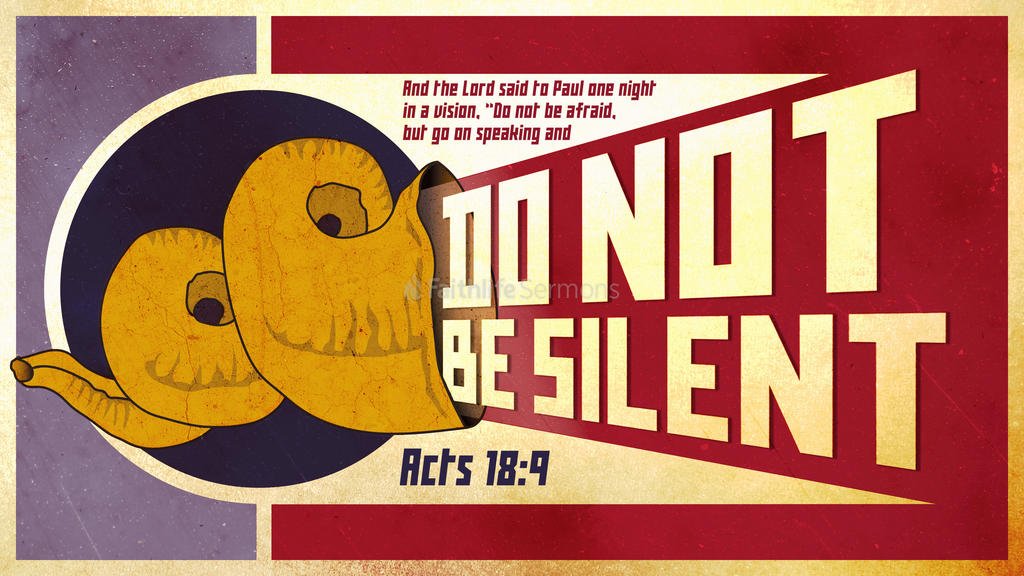
5When Silas and Timothy arrived from Macedonia, Paul was occupied with the word, testifying to the Jews that the Christ was Jesus. 6And when they opposed and reviled him, he shook out his garments and said to them, “Your blood be on your own heads! I am innocent. From now on I will go to the Gentiles.” 7And he left there and went to the house of a man named Titius Justus, a worshiper of God. His house was next door to the synagogue. 8Crispus, the ruler of the synagogue, believed in the Lord, together with his entire household. And many of the Corinthians hearing Paul believed and were baptized. 9And the Lord said to Paul one night in a vision, “Do not be afraid, but go on speaking and do not be silent, 10for I am with you, and no one will attack you to harm you, for I have many in this city who are my people.” 11And he stayed a year and six months, teaching the word of God among them.

12But when Gallio was proconsul of Achaia, the Jews made a united attack on Paul and brought him before the tribunal, 13saying, “This man is persuading people to worship God contrary to the law.” 14But when Paul was about to open his mouth, Gallio said to the Jews, “If it were a matter of wrongdoing or vicious crime, O Jews, I would have reason to accept your complaint. 15But since it is a matter of questions about words and names and your own law, see to it yourselves. I refuse to be a judge of these things.” 16And he drove them from the tribunal. 17And they all seized Sosthenes, the ruler of the synagogue, and beat him in front of the tribunal. But Gallio paid no attention to any of this.

  • God is ... What do we learn about God in this passage?
  • We are ... What do we learn about people in this passage?
  • What does 1 Corinthians 2:3 say about Paul’s disposition when he arrived in Corinth? Why did he feel this way?
  • What was the moral and spiritual climate in Corinth in Paul’s day (see 1 Corinthians 6:9-20)?
  • Claudius' order Acts 18:2 was given in A.D. 50 after a Jewish riot in Rome over the preaching of Christ. What else reveals a Roman attitude toward Christianity Acts 18:12-17)? Would this help or hinder Christian witness? 
  • If you were a missionary looking for a promising location for work, do you think you would have chosen Corinth? Explain. Do you think the gospel is the best solution to the world’s ills?
  • How did Paul and his new friends Aquila and Priscilla meet each other’s needs?
  • Why was Paul able to give up tent-making for full-time preaching in Acts 18:5?
  • How did Paul's ministry change after Timothy and Silas came to him (see 2 Corinthians 11:9)? 
  • How might the vision from God in Acts 18:9-10 and the gift from the Philippians encourage him?
  • How did Paul respond to God’s promises made in verses 9-10 (see v. 11)? How did God keep his promise?
  • What historical facts do we know about Gallio?
  • Why would Luke think this case before Gallio important to include in his narrative?
  • When have you felt like Paul—worn out, alone, afraid, broke, worried? What did you do about it? What did God do about it?
  • I will ... What has the Holy Spirit revealed to us in this passage? How can I apply it to my life this week?
  • With what missions or missionaries have you entered into financial partnership? If you were called to the foreign mission field, would you seek such partners, or would you become a "tent-maker"? Why? 
  • How could your present job be "tent-making" to support your family while you engage in God's kingdom work?
  • Thinking of this section as being about relationships, why are relationships so hard to make and maintain in the church?
  • You can ... Who do you know who needs to hear this? Feel free to share with others by social media links at the bottom of this.


=============


Do Not Be Silent (Crispus) - Acts 18:1-11

#One80


1 & 2 CORINTHIANS IN RELATION TO ACTS
                                                            By Mark Moore

1.            Paul sent Titus from Ephesus to Corinth with a copy of 1 Corinthians in the Spring of A.D. 55: 1 Cor 16:5–8 After I go through Macedonia, I will come to you—for I will be going through Macedonia. Perhaps I will stay with you awhile, or even spend the winter, so that you can help me on my journey, wherever I go. I do not want to see you now and make only a passing visit; I hope to spend some time with you, if the Lord permits. But I will stay on at Ephesus until Pentecost.

2.            Paul writes a painful letter to the Corinthian Church: 2 Cor 2:3 I wrote as I did so that when I came I should not be distressed by those who ought to make me rejoice. I had confidence in all of you, that you would all share my joy.

3.            Paul takes off for Macedonia, hoping to meet up with Titus: Acts 20:1 When the uproar had ended, Paul sent for the disciples and, after encouraging them, said good-by and set out for Macedonia.  

4.            Paul stopped at Troas to preach the gospel: 2 Cor 2:12–13 Now when I went to Troas to preach the gospel of Christ and found that the Lord had opened a door for me, I still had no peace of mind, because I did not find my brother Titus there. So I said good-by to them and went on to Macedonia.

5.            Paul finally meets up with Titus and gets a good report about the Corinthians' repentance: 2 Cor 7:5–9 For when we came into Macedonia, this body of ours had no rest, but we were harassed at every turn—conflicts on the outside, fears within. But God, who comforts the downcast, comforted us by the coming of Titus, and not only by his coming but also by the comfort you had given him. He told us about your longing for me, your deep sorrow, your ardent concern for me, so that my joy was greater than ever. Even if I caused you sorrow by my letter, I do not regret it. Though I did regret it—I see that my letter hurt you, but only for a little while—yet now I am happy, not because you were made sorry, but because your sorrow led you to repentance. For you became sorrowful as God intended and so were not harmed in any way by us.


6.            Paul writes 2 Corinthians and sends it ahead with Titus from Macedonia: 2 Cor 7:13 By all this we are encouraged. In addition to our own encouragement, we were especially delighted to see how happy Titus was, because his spirit has been refreshed by all of you.


===============
CORINTH —  From Athens, Paul moves on to Corinth, where he spends 18 months (Acts 18:11), the longest in any church except for Ephesus, where he stayed about three years (Acts 19:8, 10). As major cities in the empire, Corinth and Ephesus become the missionaries’ bases of operation to evangelize the surrounding regions. Paul has a long (and sometimes tempestuous) relationship with the church at Corinth, which suffers from the kinds of problems typical of those who convert from a pagan environment of immorality and idolatry.

Paul's coming to Corinth was "in weakness and fear, and with much trembling" (1 Corinthians 2:3). Though he was directed through a vision to minister in Macedonia (Acts 16:9-10), the mission there had not gone at all as he had expected. Nor had his initial attempt in Achaia provided him with any reason to hope for a change in his fortunes. So he must have traveled from Athens to Corinth in a dejected mood, wondering what worse could happen and why God had allowed matters to fall out so badly. Also, he was almost sick with anxiety over the state of the Thessalonian converts whom he had been forced to leave with the threat of persecution hanging over them (1 Thessalonians 2:17-3:5). All this drove Paul into depression. He was only human, and he found that his emotions affected his spiritual well-being and his work. Perhaps at this time he prayed repeatedly for deliverance from his "thorn in the flesh," to which God responded, "My grace is sufficient for you, for my power is made perfect in weakness" (2 Corinthians 12:7-10).

At Corinth the exact situation is difficult to ascertain, mainly because in his letters to the Corinthians Paul provides so much allusive material about his relations with them, while Luke gives so little in Acts. One reason for this problem is the wide difference of purpose between Paul and Luke in their written materials: Paul's concern was pastoral and Luke's apologetic. Luke's main interest here in Acts 18 is the proceedings before Gallio (vv.12-17), in order (1) to demonstrate that one of the wisest of the Roman proconsuls had declared Christianity to be an approved religion and (2) to warn that if Rome began to persecute the church, it would be acting contrary to Gallio, a ruler renowned for his urbanity and wit.

The emperor Claudius Caesar (A.D. 41–54), while favorable toward the Jews early in his reign, later forbade their assembly. Suetonius, a Roman historian, indicates that Claudius “expelled from Rome the Jews, who were constantly rioting under the leadership of Chrestus.” Two Jewish refugees affected by this expulsion (which is dated in A.D. 49 by Orosius, a church historian) were Aquila and Priscilla. Luke records that when Paul stayed with them in Corinth, they “had recently come from Italy” because of Claudius’s edict (Acts 18:2, 3).

During a period of 18 months Paul established a flourishing Christian congregation (18:11). In A.D. 51 he was brought before Gallio, the Roman proconsul of Achaia (southern Greece). The archaeological remains of Gallio’s judgment hall have now been discovered. Perhaps more important, however, is an inscription found at Delphi that mentions Gallio and fixes his brief proconsulship over Achaia (about one year) in A.D. 51–52. The likelihood, then, that Paul founded the church in Corinth in A.D. 51 is one of the most certain points for establishing the chronology of Paul’s ministry.

After leaving Corinth, Paul accompanied Priscilla and Aquila to Ephesus. He left them there and sailed to Caesarea. He next greeted the church at Jerusalem before returning to his home base in Antioch.


===============

GALLIO—ACTS 18:12


1.               Proconsul, most probably 51–52 A.D.

2.               Real name:  Marcus Annaeus Novatus.

3.               Took the name of his adopted father, Lucius Junius Gallio upon coming to Rome.

4.               Younger brother of Seneca the Stoic philosopher and tutor of Nero as a child.

5.               Noted for his mild disposition:
                  Seneca, Natural Questions, IV.
                Statius, Silvae, II. 7. 32.
                  Seneca, Epistolae Morales, CIV.

6.               Achaia just recently returned to the rule of a proconsul, probably in conjunction with the Jewish expulsion from Rome.


=====================

   One Sunday, I was telling the story of Aquila the tent-maker to my 6-year-old daughter's Sunday-school class. As a demonstration, I had brought along my sewing machine to sew a tent for the children to play in after the lesson. While I was sewing, I asked the children if any of their mothers used a sewing machine. I was surprised to see that my daughter was the only one raising her hand.
   I asked if any of their mothers used a needle and thread to mend clothes or to sew on a loose button. Again, my daughter was the only one raising her hand.
   A few minutes later, I noticed one little boy with tears in his eyes. I asked, "Brady, what's wrong?"
   He replied, "My mom only knows how to use a curling iron!"

   --  Amy B., "Life in Our House," Christian Parenting Today, Vol. 13, no. 4.

See: Pr 31:10-31; Ac 18:1-26; Titus 2:4-5


Monday, August 11, 2025

Colossians 3:18-4:1 Instructions for Christian Households = August 7

Instructions for Christian Households
Colossians 3:18-4:1

Intro Questions

Text Graphic
  • God is ... What do we learn about God in this passage?
  • We are ... What do we learn about people in this passage?

  • I will ... What has the Holy Spirit revealed to us in this passage? How can I apply it to my life this week?

  • You can ... Who do you know who needs to hear this? Feel free to share with others by social media links at the bottom of this.


Other Resources: 
Transformation And The Renewing of Our Minds Colossians 3  https://virtualbiblestudy.com/lessons/colossians/3/


Prison Epistles
Jesus: The Model of Our Living
Colossians 3:18-4:1


YOUR WORK IS IMPORTANT by Doug Parsons— "He who labors as he prays, lifts his heart to God with his hands," wrote Bernard of Clairvaux in 1130 A.D. He might have written, "...in his callused hands." Our work, and our jobs define our lives and tell us in part why we're in the world.
Many of the most popular songs across the years speak of how important our jobs are! Work too often becomes our identity. Some years ago there was a country and western song - a kind of crass song — whose opening line was "Take this job and..." well, you know the rest, of course. Obviously, the songwriter was not happy with his job. Tennessee Ernie Ford once sang, "You load sixteen tons and what do you get? /Another day older and deeper in debt./St. Peter don't you call me 'cause I can't go/I owe my soul to the company store."
One of my favorite bumper stickers amends the song of the Disney dwarfs to say, "I owe, I owe, so off to work I go!" It happens day after day.
What a great gift to have a job, to work till we're "sick of livin' and scared of dyin" and then to come to Christ's church and be the people of God together. Bother being at work and being the people of God are most necessary to think well of ourselves. Here are some guidelines on how to experience daily satisfaction from your work:
Decide what needs doing. Make a list of what you hope to accomplish in one day. Number these tasks in their order of importance. Tackle a tough job first and try to complete it. Upon its conclusion, place a checkmark on your list - it's a mini-reward.
Deal with trivia. Don't waste time making decisions on every letter or article. Handle the things you can and place less important things in a box to be sorted later. Avoid rifling through piles again and again.
Handle interruptions gracefully. Give your undivided attention to an interruption. Consider them "God-sent." Answer a phone call with your name. If you are in the middle of something important ask to call them right back.
Share the work. Beware of the "Lone Ranger" syndrome; there are some jobs others can do as well. Delegate a task and acknowledge its completion. If you are the only one with a certain skill, train one or two others in it.
Take a break. You'll get more done by taking "time-out" mid-morning and mid-afternoon if possible. You'll return to work mentally and physically refreshed and measurably more productive.
Every worker in the ranks of the labor force can take encouragement from the words of Jesus Christ: "My Father is always working, and I too must work" (John 5:17).

Opening Questions — Get Us Thinking:
  • We live in a time where there is lots of confusion about what is right and wrong. What should determine what is “normal” and the standard for “Christian” society or church?

Instructions for Christian Households — Colossians 3:18-4:1
18Wives, submit yourselves to your husbands, as is fitting in the Lord.
19Husbands, love your wives and do not be harsh with them.
20Children, obey your parents in everything, for this pleases the Lord.
21Fathers,c do not embitter your children, or they will become discouraged.
22Slaves, obey your earthly masters in everything; and do it, not only when their eye is on you and to curry their favor, but with sincerity of heart and reverence for the Lord. 23Whatever you do, work at it with all your heart, as working for the Lord, not for human masters, 24since you know that you will receive an inheritance from the Lord as a reward. It is the Lord Christ you are serving. 25Anyone who does wrong will be repaid for their wrongs, and there is no favoritism.
1 Masters, provide your slaves with what is right and fair, because you know that you also have a Master in heaven.

Research Questions — “Dig Deeper” to find God’s Will
  1. God is ... What do we learn about God?
  2. We are ... What do we learn about people?
  3. What attitudes have you seen in a family or on the job that you would label as “Christian”?
  4. How do Paul’s commands to wives/husbands, children/fathers/ and slaves/masters address our tendency to do the opposite?
  5. What is Paul's (Inspired by God) view of husbands and wives and their relationship with each other (vv. 18-19)? Why would Paul instruct women to be submissive in verse 18?
  6. The wife is to submit to the husband “as is fitting in the Lord” (v. 18) From what you learned earlier in the chapter, what would that kind of submission include?
  7. How does "submission" relate to Jesus' life on earth? Why are these commands to submit and love unconditional; that is, not dependent on the behavior of the spouse?
  8. How does "in the Lord" modify the meaning of "fitting" in verse 18?
  9. What was the typical male role in Roman society and how did it affect Christian marriages?
  10. How were husbands in particular and Paul's audience in general to understand the command to love (v. 19)?
  11. Why is the basic command to children: “Obey your parents” (v. 20)? How is the Christian view of children different than first-century society? Why would "fathers" receive a special command about their children and what they are not to do (v. 21)?
  12. How is "pleases" (v. 20) used elsewhere in Scripture and what does that imply?
  13. Can you shed some light on the command in verse 20 to "obey"?
  14. Contrast "discouraged" (v. 21) with Paul's other commands to fathers on the treatment of children. What attitudes and actions of parents embitter or discourage their children?
  15. What was the state of slavery in the first century? What is Paul's and, therefore, Scriptures view of slavery (v. 22)? When and how are slaves to obey their masters (vv. 22-25)? With what motives? How are Christian slaves to serve their masters (see verse 22)
  16. What would a slave imply from the word "reward" in verse 24?
  17. To who does the term "anyone" (v. 25) refer to?
  18. Why address masters (v. 4:1)? What would it demand of a master to “provide your slaves with what is right and fair” What does "fair" mean in verse 4:1? What is the motivation for fair treatment (v. 4:1)?

Reflective Questions — Live it today.
  1. How does freedom in Christ relate to obedience (v. 22)?
  2. How should knowing “that you also have a Master in heaven” affect a master’s attitude toward himself and his slaves (3:25-4:1)?
  3. What is Paul wanting slaves to understand about work with regard to the assigned tasks of a slave who is now a Christian (v. 23)?
  4. How would obeying these instructions change how you do your job as an employee or employer (3:22-4:1
  5. How would following the instructions in 3:18-4:1 demonstrate that “you have been given fullness in Christ, who is the head over every power and authority”
  6. I will ... What has the Holy Spirit revealed to you in this passage? How will you apply it to your life this week?
  7. You can ... Who do you know who needs to hear this?
  8. How does this equip us be a better disciple and help empower us to “make disciples”?

Plan your work — then work your plan.


Heart and Home
Barring some unexpected happening, more than half of all first-time marriages will end in divorce. The children from these failed marriages will grow up finding it more difficult to trust anyone. They'll be uncertain of what to do or when to do it. They will be victims of our only socially accepted form of child abuse. Does it seem to you that we are already experiencing the beginning of the divorce fallout?
According to the Family Research Council, if the current trend continues, more than 60% of all children born after 1987 will spend part of their "growing up years" in a single-parent home. Right now, one child in four lives with only one parent, usually the mother. How many kids in our congregation live in a single-parent family?
Although the numbers are hard to document, social scientists are estimating that over 25% of all American children are living in a physically and/or sexually abusive home. And, it seems some of the worst offenders are rigid fundamentalists who defend their twisted actions as a God-ordained right "to best the devil out of their children."
In a special issue on children, Fortune magazine revealed, "The most reliable predictor of crime in a neighborhood is not poverty or race, but fatherlessness." Some children are fatherless due to divorce, death, or desertion, some are fatherless because of their Dad's overinvolvement in his career, and some are fatherless because their dads don't know what to do. Do you know any of those dads?
A recent Newsweek article stated, "Many of today's parents were raised in the 60s, the age of permissiveness. Their children were born in the age of affluence, the 80s, when materialism was rampant. It's an unholy combination." Where will our young families learn "how" to be Christian families?
Malachi warned that if the, hearts of fathers and children aren't turned to each other, we will experience a curse in the land. Is that what we are experiencing?
The National Center for Fathering has, found that young men have a strong desire to be more involved in the lives of their children, contrary to the new book, Real Men Don't Bond. They want desperately to bond to their children, but they don't know howl

Who will help them? God's church! It's time to move beyond analyzing and hypothesizing. While we are debating whether we can clap in a worship service, sing during communion, or mention Jesus during December, this generation is lost in a serious struggle for direction - They need you to help show them the way.


THE PLACE OF FAMILY TRADITION
by Norman Bales

There's a picture of my father on a shelf just behind my office chair. In the picture he's wearing a western hat cocked slightly to the right. Last week I wore a baseball cap while doing some yard work. I happened to glance at myself in the mirror and noticed that I was wearing my cap cocked slightly to the right. When I thought about it, I realized that family tradition determined the peculiar angle of my cap. As a matter of fact I imitate my father in many of the things I do. I'm far better educated than he was, but in my unguarded moments I make the same grammatical errors in my speech (I say "ain't," use double negatives and I often feel inclined to substitute "them" for "those" even though I know "them" is not a possessive pronoun). I sometimes mispronounce words the same way he did. A wheel barrow becomes a "wheel bar;" Ann "arns" my clothes and barbed wire becomes "bob war." I also tend to emulate many of his social patterns, much to the irritation of my wife. Family tradition is strong.
            Family tradition probably has more influence on the adoption of ethical standards among young people than any other one factor. Recent studies among adolescents indicate they often adopt the lifestyles and behavior patterns of their parents. (See The Gospel According to Generation X by Dodd, Lewis and Tippens). If a child's parents say one thing and do another, their offspring will generally pick up on their behavior, not their rhetoric. Certainly, the church has a strong role to play in character formation. We need to do everything we can to communicate Biblical ideals. Sometimes a preacher, a youth minister and other church leaders can be quite effective in mentoring young people whose parents are poor role models. Even so, parents generally have more influence than anyone else. We like to pin the blame on the media, peer pressure and public institutions when our kids get in trouble. It makes us very uncomfortable to deal with our own parenting shortcomings as a likely cause of a child's irreverent behavior.
            Children are perceptive. They are quick to detect phoniness. That's why it's important for us to make sure that our lifestyles and beliefs match up as closely as possible.

            The educational system under the law of Moses was constructed on the premise that standards of behavior are most effectively communicated through family tradition. "Keep these words that I am commanding you today in your heart. Recite them to your children and talk about them when you are at home and when you are away, when you lie down and when you rise" (Deuteronomy 6:6-7). "Like father like son" is not an empty phrase. What kind of family traditions are being developed in your home?"


What Makes A Family Complete
Colossians 3:18-4:1

Immanuel – God Coming Is Our Basis for Hope

Spirituality and Relationships are Closely Connected.


Reality and Relationships are Counter-Cultural.
Husbands and Wives: Love and Submission (Col. 3:18-19)

Parents and Children: Encouragement and Obedience (Col. 3:20-21)

Masters and Servants: Honesty and Devotion (Col. 3:22-4:1)

Attitudes and Relationships are Clearly Challenging.
Submit to ordained authority.
Permit God's spirit to smooth our rough edges.
Commit to excellence in whatever we do.
Admit our accountability to Christ.

Meaning and Relationships are Christ-centered.


4 Ways To Glorify God At Work

Here are four ways you can glorify God while you’re at work.

A Godly Work Ethic

If we claim to be Christian at work and yet don’t work like one, we’re showing our co-workers that Christians are no different from the rest of the world. What if a Christian faced a decision to either do something unethical (wrong) or face the risk of losing their job? Of course, the Christian would have to risk losing their job to obey what they know to be right. A godly work ethic is one that speaks volumes about our faith in God and that we are not going to compromise with sin.

Giving it Your All

The Christian should not even hesitate to give it all they’ve got at work as the Apostle Paul writes, “Whatever you do, work heartily, as for the Lord and not for men, knowing that from the Lord you will receive the inheritance as your reward. You are serving the Lord Christ” (Col 3:23-34). This is basically what Solomon said in Ecclesiastes 9:10, where he wrote, “Whatever your hand finds to do, do it with your might, for there is no work or thought or knowledge or wisdom in Sheol, to which you are going.”

Being Salt and Light

Jesus tells His followers that we are the light of the world but also the salt of the earth, however “if salt has lost its taste, how shall its saltiness be restored? It is no longer good for anything except to be thrown out and trampled under people’s feet” (Matt 5:13b) and since we are the light of the world that shines into the darkness because “A city set on a hill cannot be hidden. Nor do people light a lamp and put it under a basket, but on a stand, and it gives light to all in the house. In the same way, let your light shine before others, so that they may see your good works and give glory to your Father who is in heaven”(Matt 5:15-16).

Be an Ambassador

Once a person has trusted in Christ, they have become a new creation in Christ (2nd Cor 5:17), and as new creations and children of God, “we are ambassadors for Christ, God making his appeal through us. We implore you on behalf of Christ, be reconciled to God” (2nd Cor 5:20). An ambassador represents their own country and our country is heavenly and not an earthly one, so if we are truly ambassadors for Christ at work, others might be drawn to this new kingdom, the New Jerusalem, which will descend out of heaven someday (Rev 21:1-2).

Conclusion

We are created to glorify God and we can do that at work by having a sterling work ethic; by working as hard as we can, even when no one’s looking; when we get our salt out of the shaker and our light out from under a basket; and be an ambassador for Christ in the hopes of bringing others into the kingdom. These can all glorify God.

May God richly bless you,

Thursday, June 12, 2025

Proverbs 22:1-29 The Worth of Wisdom and the Paths of Integrity = Week 24 - Saturday

The Worth of Wisdom and the Paths of Integrity

Proverbs 22:1-29


Reminder: Pray to God to set your heart right as you engage His word. The text you are about to study was not written to you but is written for you. So, before applying we must ask the following questions:
  • What did it mean to the original reader or original audience?
READ THE SCRIPTURE (Multiple times & translations and notice the words that standout)
Biblegateway (NIV) (My choice of all-round site. It is a Great app, better on computers or on smartphones)
StepBible (ESV) (Great on phone or computer with good resources.)
Literal Word  (New American Standard Bible) (Works well on a smartphone or computer + for searching for words like a printed concordance)
Biblia.com (New Century Version) (Great on a computer especially if you have a logos account)


Themes
Wisdom and Understanding
Wealth and Poverty
Righteousness and Wickedness
Discipline and Guidance
Integrity and Honesty

Topics
The Value of a Good Name
The Folly of Laziness and Debt
Guidance for Children
The Consequences of Wickedness and Righteousness
Fairness and Justice


Potential Sermon Titles: ??

Intro Questions to get us thinking:
  • What inherited meaning does your name have? What other names do you go by?
  • Which grade school or high school teacher did you have a crush on? Which one swayed your character or career? How so? Which one would you seek out at a school reunion? Why? 

  • ESV Text with Highlights
    #God = 
    #People = The Wise, The Foolish, The Rich, The Poor, The Righteous, The Wicked, Children
    #Time = 
    #Place = 
    #Obedient faith = 
    #Sin = 
    #Key Idea = 

    Proverbs 22 ESV

    1A good name is to be chosen rather than great riches,
    and favor is better than silver or gold.
    2The rich and the poor meet together;
    the Lord is the Maker of them all.
    3The prudent sees danger and hides himself,
    but the simple go on and suffer for it.
    4The reward for humility and fear of the Lord
    is riches and honor and life.a
    5Thorns and snares are in the way of the crooked;
    whoever guards his soul will keep far from them.
    6Train up a child in the way he should go;
    even when he is old he will not depart from it.
    7The rich rules over the poor,
    and the borrower is the slave of the lender.
    8Whoever sows injustice will reap calamity,
    and the rod of his fury will fail.
    9Whoever has a bountifulb eye will be blessed,
    for he shares his bread with the poor.
    10Drive out a scoffer, and strife will go out,
    and quarreling and abuse will cease.
    11He who loves purity of heart,
    and whose speech is gracious, will have the king as his friend.
    12The eyes of the Lord keep watch over knowledge,
    but he overthrows the words of the traitor.
    13The sluggard says, “There is a lion outside!
    I shall be killed in the streets!”
    14The mouth of forbiddenc women is a deep pit;
    he with whom the Lord is angry will fall into it.
    15Folly is bound up in the heart of a child,
    but the rod of discipline drives it far from him.
    16Whoever oppresses the poor to increase his own wealth,
    or gives to the rich, will only come to poverty.

    Words of the Wise

    17Incline your ear, and hear the words of the wise,
    and apply your heart to my knowledge,
    18for it will be pleasant if you keep them within you,
    if all of them are ready on your lips.
    19That your trust may be in the Lord,
    I have made them known to you today, even to you.
    20Have I not written for you thirty sayings
    of counsel and knowledge,
    21to make you know what is right and true,
    that you may give a true answer to those who sent you?

    22Do not rob the poor, because he is poor,
    or crush the afflicted at the gate,
    23for the Lord will plead their cause
    and rob of life those who rob them.
    24Make no friendship with a man given to anger,
    nor go with a wrathful man,
    25lest you learn his ways
    and entangle yourself in a snare.
    26Be not one of those who give pledges,
    who put up security for debts.
    27If you have nothing with which to pay,
    why should your bed be taken from under you?
    28Do not move the ancient landmark
    that your fathers have set.
    29Do you see a man skillful in his work?
    He will stand before kings;
    he will not stand before obscure men.


    OBSERVATIONS (Reflect on the topic and build the concept the writer is trying to communicate to the original audience)
    ebible (NLT) (Best for having Bible sections divided by "pericope" or sections by thought)
    Bible Project (NLT) (Helpful videos and instructions for the bigger picture)
    Thematic Bible (Books and Chapters Structure)
    Bible Hub = Outline, Themes, Topics, People, Locations, and Questions

    First Outline
    Wisdom instructs on how to secure and keep a good name. It emphasizes wise words and justice toward others, especially the poor.
    •  A GOOD NAME (22:1): A good reputation is better than silver or gold.
    •  SOME GENERAL GUIDANCE (22:2–16): The Lord made all of us, and we all have the choice to do right.
    •  SOME GOOD ADVICE (22:17–29): The wise will heed these sayings as they trust in the Lord.

    2nd Outline
    Here is a summary of Proverbs 22:

    Proverbs 22 contains 31 proverbial sayings that offer wisdom on various aspects of life. It emphasizes the value of integrity, the importance of discipline, and the blessings of righteousness.

    Key Themes

    The main themes of Proverbs 22 include:

    1. The value of wisdom and understanding
    2. Wealth and poverty
    3. Righteousness vs. wickedness
    4. Discipline and guidance
    5. Integrity and honesty

    Structure

    The chapter is divided into three main sections:

    1. Verses 1-9 focus on the value of integrity and kindness
    2. Verses 10-16 discuss guidance and discipline
    3. Verses 17-29 emphasize paying attention to wisdom

    Key Teachings

    Some of the most important teachings in Proverbs 22 include:

    • The value of having a good name over wealth (verses 1-2)
    • The importance of training children in the right way (verse 6)
    • The dangers of borrowing money and laziness (verses 7, 26-27)
    • The blessings of generosity towards the poor (verse 9)
    • The consequences of oppressing the poor or giving gifts to the rich (verses 16, 23)
    • The importance of listening to and applying wisdom (verses 17-19)

    Practical Applications

    Proverbs 22 offers practical wisdom for daily life, including:

    • Applying the principle of valuing a good name over wealth
    • Demonstrating generosity to the poor
    • Avoiding debt and laziness
    • Practically implementing guidance for children
    • Applying fairness and justice in interactions with others
    • Honoring traditional wisdom and advice of elders

    Conclusion

    Proverbs 22 provides timeless wisdom about integrity, discipline, and righteousness. It reminds readers that our actions affect not only ourselves but also those around us. By applying the principles taught in this chapter, individuals can live more righteous and fulfilling lives.


    STUDY RESOURCES (This takes some work and here are more resources than you can go through completely)
    Rhys N. Thomas @ Thomas Theology Hub is a great resource.
    NETBible (New English Translation) (Great for original text information)
    BlueLetter  (King James Version) (A variety of resources and good on Phones / better on Computers)
    BibleHub (HCSB) (Good on computer or app/phone with lots of well-organized information.)
    BibleHub (BSB) (Good on computer or app/phone with lots of well-organized information.)
    BibleRef.com (New King James Version) Basic able to compare core translations.
    StudyLight (Amplified Bible) (Great site with commentaries by Burton Coffman)
    KnowingJesus (Phone / Computer and great for comparing translations)
    Bible.com (Lexham English Bible)
    • God is ... What do we learn about God in this passage?
    • We are ... What do we learn about people in this passage?
    • How can a good name be more valuable than riches? 
    • How should we view the rich and poor (vv. 2, 7, 9, 16)? What do they have in common? How do they differ? How might they depend on each other? Who does God bless and why? 
    • What distinguishes the "wicked," the "simple," the "mocker." the "sluggard" and "adulteress" from the "prudent" and "pure in heart"? 
    • What child-rearing principle and promise do you see in verses 6 and 15? Does this general rule offer an absolute guarantee? What about the child's freedom to choose, despite perfect parenting? 
    • What do these "sayings of the wise" sound like: Empathy? Game rules? Parent talk? Candid confessions? 
    • Why do they strike you that way: Tone? Context? Or what? 
    • Toward what end is this instruction in wisdom given (vv. 17-21)? What three-step process gets you there? By whom is one held accountable for this? 
    • What is the wise course of action concerning the poor and needy? Your friends and associates? Your vows and debts? 
    • What do verses 28-29 say about getting ahead honestly? 


    APPLICATION (God wants us all to arrive at action, life-changing faith)
    ESV (English Standard Version) Good translation with some helpful resources.
    Biblegateway (Christian Standard Bible) has some application resources.
    The Message (MSG) (An easy-to-read paraphrase that helps some with application)
    Heartlight (Great for practical application of scripture)

    • What have you done (or could you do) to make or unmake a "good name" for yourself, your family, or your profession? 
    • Someone has said of verse 6 and related texts: "You can't raise a Christian, only sinners exposed to the Gospel." And... "Before, I had three sure-fire child-rearing principles, but no kids; now I have three kids but no sure-fire principles." What do such statements assume about human nature? Sin? Parenting? God's grace? Do you agree or disagree? Why? 
    • What kind of child to your Heavenly Father have you proven to be? Whose faith do you have now? Your own? Your parents? No faith at all? Why? 
    • Verse 13 smacks of "Excuses, Excuses”. How do you procrastinate in your relationship with God? How can your group help you?
    • Where are you in the 3-step process of verses 17-21? How prepared are you to "give sound answers"? 
    • What works for you in handling an angry associate or roommate? What does this chapter suggest (v. 24)? 
    • If you are (or want to be) skilled at some work (v. 29), who would you want to work for? What people would you want to serve? Why?
    • I will ... What has the Holy Spirit revealed to us in this passage? How can I apply it to my life this week?
    • What transformative move needs to be made?
    • You can ... Who do you know who needs to hear this? Feel free to share with others by social media links at the bottom of this.

    Take Away Challenges
    • What has the Holy Spirit revealed to you in this passage? How will you apply it to your life this week?
    • Whom do you know who needs to hear this?
    • What is God bringing to your attention in this discussion? What beliefs, thoughts, or actions need to be addressed or changed?
    Contemplative Action:
    Take a moment to meditate on how these aspects—reputation, education, and generosity—play out in your life. How can you align more closely with the wisdom of Proverbs 22 in your daily routine? Ask God to reveal areas where you can grow and make a difference.
    This week, choose one area from Proverbs 22 to focus on—whether it's improving your reputation, investing in the education of someone you care about, or finding a way to be more generous. Take concrete steps to apply this wisdom and see how it transforms your life and the lives of those around you.

    PRAYER: Heavenly Father, thank You for the wisdom found in Proverbs 22. Help me to live out these truths in my life. Grant me the strength to build a good reputation, the dedication to teach and guide effectively, and the heart to be generous. May my life reflect Your love and grace in all that I do. In Jesus’ name, Amen.


    #Children #Child Rearing 
    •  Proverbs 3:12 For whom the LORD loveth he correcteth; even as a father the son in whom he delighteth. 
    • Proverbs 10:1 The proverbs of Solomon. A wise son maketh a glad father: but a foolish son is the heaviness of his mother. 
    • Proverbs 13:22 A good man leaveth an inheritance to his children's children: and the wealth of the sinner is laid up for the just. 
    • Proverbs 13:24 He that spareth his rod hateth his son: but he that loveth him chasteneth him betimes. 
    • Proverbs 15:20 A wise son maketh a glad father: but a foolish man despiseth his mother. 
    • Proverbs 17:2 A wise servant shall have rule over a son that causeth shame, and shall have part of the inheritance among the brethren. 
    • Proverbs 17:25 A foolish son is a grief to his father, and bitterness to her that bare him. 
    • Proverbs 19:13 A foolish son is the calamity of his father: and the contentions of a wife are a continual dropping. 
    • Proverbs 19:18 Chasten thy son while there is hope, and let not thy soul spare for his crying. 
    • Proverbs 19:26 He that wasteth his father, and chaseth away his mother, is a son that causeth shame, and bringeth reproach. 
    • Proverbs 19:27 Cease, my son, to hear the instruction that causeth to err from the words of knowledge. 
    • Proverbs 20:11 Even a child is known by his doings, whether his work be pure, and whether it be right. 
    • Proverbs 20:20 Whoso curseth his father or his mother, his lamp shall be put out in obscure darkness. 
    • Proverbs 22:6 Train up a child in the way he should go: and when he is old, he will not depart from it. 
    • Proverbs 22:15 Foolishness is bound in the heart of a child; but the rod of correction shall drive it far from him. 
    • Proverbs 23:13 Withhold not correction from the child: for if thou beatest him with the rod, he shall not die. 
    • 14 Thou shalt beat him with the rod, and shalt deliver his soul from hell. 
    • Proverbs 23:15 My son, if thine heart be wise, my heart shall rejoice, even mine. 16 Yea, my reins shall rejoice, when thy lips speak right things. 
    • Proverbs 23:24 The father of the righteous shall greatly rejoice: and he that begetteth a wise child shall have joy of him. 
    • Proverbs 29:15 The rod and reproof give wisdom: but a child left to himself bringeth his mother to shame. 
    • Proverbs 29:17 Correct thy son, and he shall give thee rest; yea, he shall give delight unto thy soul. 
    • Proverbs 29:21 He that delicately bringeth up his servant from a child shall have him become his son at the length.


    Other Resources:


    • Other YouTube Videos
    Training for Eternity / Sermon – Mike Mazzalongo | BibleTalk.tv


    • Articles

    • Devotions

    Devotional: Wisdom for Living Well

    Reflection:

    Proverbs 22 offers timeless wisdom that resonates deeply with our everyday lives. As we dive into this chapter, let’s focus on three key areas: the value of a good reputation, the role of education and discipline, and the importance of generosity.

    1. The Value of a Good Name (Proverbs 22:1): “A good name is more desirable than great riches; to be esteemed is better than silver or gold.”

      In a world where material success often seems to take precedence, Proverbs 22:1 reminds us that our character and reputation are of greater worth. Consider the impact of your actions on those around you. Are you known for your integrity, kindness, and honesty? Reflect on how you can cultivate a reputation that honors God and builds trust with others.

      Prayer: Lord, help me to value and nurture a good name. Guide me in my actions and words so that I may be a reflection of Your love and truth. May my life be a testament to Your grace and goodness.

    2. The Role of Education and Discipline (Proverbs 22:6): “Start children off on the way they should go, and even when they are old they will not turn from it.”

      This verse highlights the importance of guiding and educating the younger generation. Whether you’re a parent, teacher, or mentor, your influence shapes their future. It’s not just about teaching academic knowledge but also instilling values and wisdom that will guide them throughout their lives.

      Prayer: Father, grant me the wisdom to teach and guide those who look up to me. Help me to impart not just knowledge but also character and faith. May my efforts bear fruit in their lives and in the world.

    3. The Importance of Generosity (Proverbs 22:9): “The generous will themselves be blessed, for they share their food with the poor.”

      Generosity is a hallmark of a heart aligned with God’s values. When we give to those in need, we not only help them but also align ourselves with God’s blessings. Reflect on the ways you can be more generous, whether through time, resources, or kindness.

      Prayer: Lord, open my eyes to the needs around me and fill my heart with a spirit of generosity. Help me to give selflessly and to reflect Your love through my actions. May my generosity be a light to others and a testament to Your provision.


    • Links 


      Please let me know if you find any broken links or corrections that need to be made. Thank you for the help to make this most useful.